





- We get a 9.2 from more than 3,000 reviews
- Digital dashboard with real-time insights
- ISO certified
Menu

Understanding the impact of prevention on absenteeism, job satisfaction and productivity
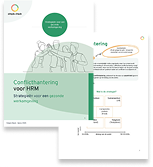
A manual based on proven methods such as TKI, coaching and mediation.

Learn how to effectively use the Sustainable Employability Index to strengthen your organization.


Sustainable employability policy factors Every HR professional wants both young and older employees to remain healthy and productive. That is why sustainable employability of employees is high on the policy agenda at many organizations. But how do you take care of improving the sustainable employability and employability of your employees?


5-step plan for effective policy, including checklist.
"*" indicates required fields
More than 1,700 companies went before you. It's that simple. Check.
Sustainable employability is a very broad concept. It encompasses, among other things, the physical and mental health of employees, their vitality and zest for life, their knowledge and skills, talents, and mindset. Both the government (through subsidies) and companies recognize the necessity and importance of developing policies around sustainable employability, but above all of putting them into practice.
Health, education, and mobility are important themes in the context of sustainable employability.
Also because people are getting older and they will work longer, it is very important to use this policy preventively. Statistics still show that people over 50 who become unemployed find it difficult to find a new job and that costs society a lot of money. By paying preventive attention to the vitality and health but also to the employability of the entire working nation, much unnecessary suffering and associated costs can be avoided.
An important aspect within a sustainable employability policy is a proactive and preventive policy, says Talitha Rijken (Advisor Sustainable Employability at Simple Check).
Rapid economic and social changes make working on sustainable employability of employees increasingly important. The ultimate goal of sustainable employability is: employees who contribute to the performance of the organization and derive added value from it themselves. This requires a lot of attention to psychosocial workload (PSA), stress and work pressure, vitality, safety and mobility. Clear themes, but the policy one can develop on these is not always easy. What measures do you take against PSA? And how do you make work-related stress recognizable and discussable?
Regarding measures against PSA and making work stress negotiable, some useful steps are:
In order to remain employable throughout their careers, it is important that employees stay healthy and energetic. A distinction is made between general agreements at the industry/company level and agreements that directly affect the employee. In a broad prevention policy within labor organizations, sustainable employability consists of three elements: vitality, work ability, and employability.
1. Vitality means being energetic, resilient, fit, and able to work tirelessly with great perseverance.
2. Work ability is the extent to which a person is physically, mentally, and socially capable of working.
3. Employability is the ability to continue to perform various tasks and functions adequately, both now and in the future.
Apart from the fact that it is therefore important to make agreements on a proactive and preventive policy, to ensure that employees do not drop out, a more in-depth approach can be taken in the area of health management. This involves agreements and measures aimed at preventing dropout in the current position. And about agreements that go beyond the legal obligations!
1. Focus on healthy lifestyle
Employers can easily and affordably create a policy focused on health and vitality within the workplace to promote a healthy lifestyle. This often involves offering company fitness programs, for example, but fortunately, it can be much more targeted and personalized.
2. Understanding workload
Workload often plays the most important role in the development of stress and burnout. In particular, the following elements:
a. heavy emotional demands; work that requires too much energy;
b. lack of support; inability to collaborate with others;
c. lack of satisfaction; not seeing that your work is useful, not enjoying the results;
d. work that disrupts your private life;
e. work pressure: too much or too difficult work for the time available, so that it is never finished and never good enough.
Dropout can also be prevented, for example, by paying targeted attention to the work-life balance. It is quite possible to provide guidance and support in this area as well, thus contributing to an employee's sustainable employability. In this way, HRM creates a vitality policy that ensures a policy towards health that goes beyond the focus on the job.
In order to remain employable within one's own function, (but also on the labor market as a whole), training throughout one's career is important. In this way, employees keep abreast of developments in their professional field and can (further) develop their competencies. A distinction is made between general training agreements at the industry or company level and training agreements focused on the individual employee.
The possibilities at the employee level do not only concern the career interview, the performance interview, job-oriented training. This can also be a development path through the use of a coach. For example, an employee's personal development path will increase the employee's overall employability. This is both function-oriented and will have a broader character. Think of the contribution this makes to, for example, the functioning of and within a team. In addition, personal development offers an important contribution in the area of mobility.
Simple Check works with various validated (by TNO developed) instruments, to enter into dialogue on sustainable employability at the level of employer and employee. For example:
All this is supported digitally. In a specially developed portal, all employees gain insight into their physical and mental health via a highly secure and personal health dashboard. This 'sustainable employability portal' offers the employee the opportunity to work specifically and motivated on a healthy lifestyle and offers the employer and/or HRM the possibility to facilitate this through customized or delivered content aimed at sustainable employability.
Want to know more about where Simple Check can support or guide for an effective policy around sustainable employability? Feel free to contact us without any obligation!

As CEO of Simple Check, I am committed to helping organizations and employees work in a vital, healthy, and enjoyable way every day.
Working with Simple Check means clear insight into what is really going on within your organization.
We help companies get a handle on work stress, vitality, health and engagement so that employees stay healthier, more energetic and productive.

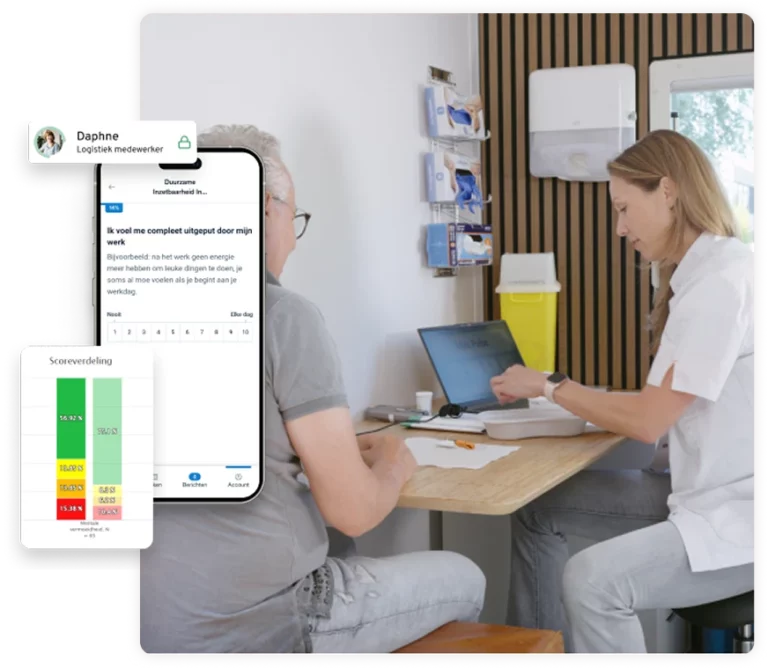
A Preventive Medical Examination (PMO) is required by law, but its true value lies in what you do with the results.…
Our consultants are ready to discover together how to create a healthy, safe and vital work environment in your company.
Request a quote Lisa Meddens
CEO of Simple Check
Lisa Meddens
CEO of Simple Check