



- We get a 9.2 from more than 3,000 reviews
- Digital dashboard with real-time insights
- ISO certified
Menu

Understanding the impact of prevention on absenteeism, job satisfaction and productivity
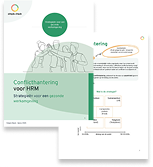
A manual based on proven methods such as TKI, coaching and mediation.

Learn how to effectively use the Sustainable Employability Index to strengthen your organization.


Stress is a healthy and natural phenomenon. Properly channeled stress is a powerful and positive engine to drive your life. The trick is to distinguish "good" stress from "bad" stress! 'The stress of modern life' is an expression we encounter all too often. At least so it seems. An expression that signifies all our 'problems'. We talk about the 'stressed life' as if it were inevitable and sometimes even necessary. As if there is no more choice. A good work-life balance is essential for reducing stress!


5-step plan for effective policy, including checklist.
"*" indicates required fields
More than 1,700 companies went before you. It's that simple. Check.
According to Statistics Netherlands (CBS), in 2014 more than eight percent of Dutch people aged 12 and older reported suffering from depression or having suffered from it in the past. This is one of the consequences of excessive stress. Currently, more than 1 million employees suffer from excessive stress. And this number seems to be rising.
A common cause for experiencing (too) much stress is that the "work-life balance" is out of balance. Work-life balance, as the name suggests, is about the relationship between your work and personal situation.
We divide our time between work, family, socializing, caring for others and hobbies. The work-life balance has to do with all kinds of things, such as travel time, traffic jams, informal care, children, financial situation, etc. A good balance is customized and since both the work and private situation change regularly, the balance changes with it. It is therefore important to monitor this balance well.
Finding out where the source of work-life imbalance lies requires self-insight. Self-insight helps you recognize and acknowledge the first signs of mounting stress as early as possible. And so it is important to find out what your "bottlenecks" are.
1. What is too much?
For example, too many tasks, too much workload, too many changes, too much sick leave, too much responsibility, too much information.
2. What is too little?
For example, not enough (support) staff, manager not present enough, unclear division of tasks (who does what when and why), not enough cooperation, not enough control options (opportunities to act yourself), not enough responsibility.
3. Social context and work contacts that increase or decrease burden ▲▼
Who is helping to carry the load? Is there support from work and home life, or not?
For example: someone at home who will listen, colleagues who are supportive or not, circumstances such as a recently deceased family member, a sick child at home.
4. Other
When, from the answers above, it appears that things are not going the way they should, people have a natural tendency to get even more involved, thus continuing to do more of the same. While this is not where the solution lies.
“The most important problems we face cannot be solved with the same level of thinking we had when we created them!” Albert Einstein
1. Personal characteristics
What characteristics are your pitfalls? For example: being in a hurry, stubborn (rigid in thinking, little willingness to change), driven, modest, accusing, loyal, mainly looking for the cause outside yourself, you feel (quickly) victimized, you would like more recognition (financial or not) and or appreciation, you would like to achieve results/something.
2. Skills
Which skills/competencies can be further developed? Does this mainly concern task-oriented skills (goal-oriented) or mainly person/process-oriented skills?
3. What is your behavior?
And is your behavior natural or is it adapted to the environment? Think: hard worker, grumble a lot and perhaps like to grumble, passive or active, not keeping appointments.
4. What are your views on work
For example: I won't be known, I don't need help, everyone is against me, don't bullshit but clean.
After this, consider what you could change to change your current situation. Answer the questions below:
Write down your ideas about this and seek advice from those around you. Present your solutions to your (HR) manager and people in your immediate environment. Ask if they can support you. In general, people like to help, they just need to know how. And you can help them with that!
Also check out our work-life balance workshop!
Finding a healthy work-life balance is crucial to reducing stress and promoting well-being. According to the Central Bureau of Statistics (CBS), in 2014, more than eight percent of Dutch people aged 12 or older reported having or have had depression, a condition often related to excessive stress.
A disturbed work-life balance can lead to increased stress levels, which in turn increases the risk of depression and other health problems. It is therefore essential to regularly reflect on both work and personal commitments and make adjustments as needed.
Asking questions such as "What is too much?" and "What is too little?" can help identify bottlenecks and take steps to restore balance. In addition, it is important to evaluate personal traits and skills that may be contributing to stress, and explore ways to improve them.
By proactively working toward a balanced work-life balance, individuals can not only reduce stress, but also increase their overall well-being and satisfaction in both work and personal life.

As CEO of Simple Check, I am committed to helping organizations and employees work in a vital, healthy, and enjoyable way every day.
Working with Simple Check means clear insight into what is really going on within your organization.
We help companies get a handle on work stress, vitality, health and engagement so that employees stay healthier, more energetic and productive.
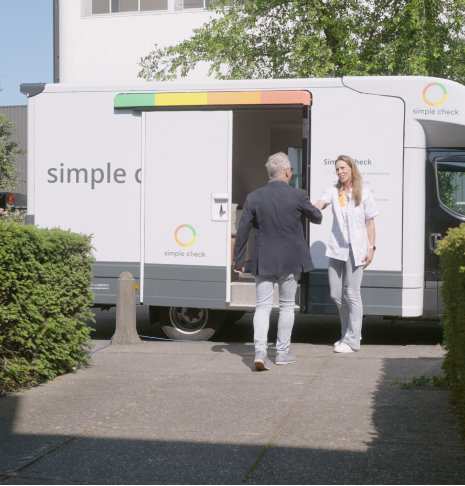
A Preventive Medical Examination (PMO) is required by law, but its true value lies in what you do with the results.…
Our consultants are ready to discover together how to create a healthy, safe and vital work environment in your company.
Request a quote Lisa Meddens
CEO of Simple Check
Lisa Meddens
CEO of Simple Check