




- We get a 9.2 from more than 3,000 reviews
- Digital dashboard with real-time insights
- ISO certified
Menu

Understanding the impact of prevention on absenteeism, job satisfaction and productivity
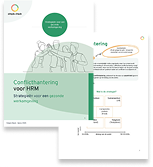
A manual based on proven methods such as TKI, coaching and mediation.

Learn how to effectively use the Sustainable Employability Index to strengthen your organization.


A Preventive Medical Examination (PME) is required by law, but its true value lies in how you use the results. Organizations that take PME results seriously and translate them into policy see lower absenteeism, greater employee engagement, and a healthier workplace. In this article, you’ll learn what the PME requirement entails, how it benefits both employers and employees, and how your organization can get started.


5-step plan for effective policy, including checklist.
"*" indicates required fields
More than 1,700 companies went before you. It's that simple. Check.
Many employers view a Preventive Medical Examination (PME) as a mandatory component of their occupational health and safety policy. And that’s correct: under the Occupational Health and Safety Act, employers are required to offer employees a PME on a regular basis. What is often underestimated is that a well-designed preventive medical examination is much more than just a legal obligation. It is a powerful tool for structurally enhancing long-term employability, vitality, and job satisfaction.
A Preventive Medical Examination (PME) is required by law, but it offers organizations much more. Discover how to transform your PME from a legal requirement into a strategic tool for sustainable employability.
PMO is not just a requirement, but an opportunity to strengthen prevention on a structural level.
The Working Conditions Act requires employers to offer employees the opportunity to participate in a preventive medical examination. The goal is to identify work-related health risks at an early stage and to prevent health complaints, absenteeism, and lost workdays.
The content of the PMO must align with the risks identified in the RI&E. These include physical strain, psychosocial risks (PSR), lifestyle, work pressure, or exposure to harmful factors such as noise. Participation in the PMO is voluntary, but employers are required to offer it.
The law requires that PMO be offered, not that people participate in it. The added value lies in how you implement it.
In practice, preventive medical examinations are sometimes still viewed as an administrative obligation. That’s a shame, because the real value lies precisely in translating the results into action. A good PMO provides organizations with:
By taking PMO findings seriously and linking them to interventions and policies, a continuous cycle of improvement is created.
Without follow-up, a PMO is merely a metric. With follow-up, it becomes a management tool.
The PMO offers clear benefits for employers. It helps with:
In addition, the PMO helps build support. Preventive measures are more readily accepted when they are based on data and recognizable indicators from within the organization.
Preventive medical examinations are also of great value to employees. They offer:
The PMO encourages employees to take charge of their health and employability, without this necessarily leading to medical treatment.
"Friendly, clear, and it encourages people to adopt a healthier lifestyle. Thank you!"
Feedback from a participant in Simple Check's Health Check
Is a preventive medical examination mandatory for all employers? Yes. Section 18 of the Working Conditions Act requires all employers—regardless of company size or industry—to offer employees a preventive medical examination on a regular basis. Participation is voluntary for employees.
How often should a PMO be conducted? The law does not specify a fixed frequency. In practice, most organizations follow a cycle of once every two to four years, depending on the nature of the occupational risks. For higher-risk situations (such as physically demanding work or high work pressure), a more frequent schedule is recommended.
What is the difference between a PMO and a PAGO? A PAGO (Periodic Occupational Health Examination) is the older term for the same concept. Today, the term PMO is used, with a broader focus: not only on work-related risks, but also on lifestyle, vitality, and self-management.
How much does a PMO cost? The cost of a PMO varies by provider and package. At Simple Check, we use a modular structure — ranging from a basic questionnaire to a comprehensive health check with a physical examination. This way, you pay for what suits your organization. Contact us for a customized quote.
At Simple Check, we view preventive medical examinations not as an end in themselves, but as a starting point. By combining these examinations with periodic assessments—such as (parts of) the PSA questionnaire or the DIX—targeted interventions, coaching, and clear communication, we create a comprehensive approach.
In this way, sustainable employability becomes not just a one-off project, but an integral part of organizational policy. Organizations that take this step are investing not only in health, but also in engagement, productivity, and future-proofing.
Sustainable employability starts with understanding and grows through follow-up.
Is your organization interested in implementing a preventive medical examination program? These five steps will help you get started:
At Simple Check, we support organizations every step of the way: from setting up preventive medical examinations to translating results into concrete actions. This turns an obligation into an opportunity.
Curious about what a PMO can do for your organization? Contact Simple Check for a no-obligation consultation.

Curious about what we can do for your company? Contact our advisors in the field of sustainable employability and discover our flexible, professional approach. At Simple Check, both people and the organization are central. Together, we work toward a healthy and productive future!

As CEO of Simple Check, I am committed to helping organizations and employees work in a vital, healthy, and enjoyable way every day.
Working with Simple Check means clear insight into what is really going on within your organization.
We help companies get a handle on work stress, vitality, health and engagement so that employees stay healthier, more energetic and productive.

Organizations often focus on visible absenteeism: employees who report sick and stay at home. But there...
Our consultants are ready to discover together how to create a healthy, safe and vital work environment in your company.
Request a quote Lisa Meddens
CEO of Simple Check
Lisa Meddens
CEO of Simple Check