




- We get a 9.2 from more than 3,000 reviews
- Digital dashboard with real-time insights
- ISO certified
Menu

Understanding the impact of prevention on absenteeism, job satisfaction and productivity
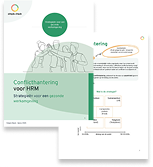
A manual based on proven methods such as TKI, coaching and mediation.

Learn how to effectively use the Sustainable Employability Index to strengthen your organization.


Mindfulness is nothing more and nothing less than "stopping. For a moment out of the doing mode. To then take a moment to become aware of how you are feeling and what you are thinking. And so learn to look at yourself without judgment or purpose. Mindfulness (training) is an accessible and typically Western form of Buddhism. In addition, according to our experience, it is a derivative of haptonomy; a teaching / science that deals with touching, feeling, physical contact. In other words, with the development of human emotional life and the development of the sense of touch, with postures, movements and gestures. Literally, "haptonomy" means the teaching of human feeling and emotional life. Through touch, you can reconnect with the feelings stored in your body. Blockages can become palpable.


5-step plan for effective policy, including checklist.
"*" indicates required fields
More than 1,700 companies went before you. It's that simple. Check.
Haptotherapy, like mindfulness, is a way of counseling that focuses on the balance between feeling, thinking and doing. After all, when feeling, thinking and doing align, we are "at our best. The emphasis is on experiencing yourself in the here-and-now, and on who you are in contact with others. It helps you develop your 'feeling capacity' so that you can better cope with your symptoms. It focuses on making you aware of feelings and promotes your body and self-awareness.
Unlike meditation, mindfulness focuses precisely on being consciously present and feeling. 'Ordinary' meditation is often aimed at 'escaping reality'. That may give a moment's rest, but to truly 'experience' life, the movement, to be able and dare to return to reality, is just as important as it is interesting.
Literally stopping whatever you are doing is always the first step you take when it comes to living "mindfully. As long as we don't -consciously- stop, we get sucked into the maelstrom of life. Then we are lived instead of living.
The simple thing about mindfull living is that it can always be done. In fact, you can ALWAYS STOP. Often our lives move so fast that we think we don't have time. And when we wait to "stop" until we actually have time it is most likely never going to happen. So it can be done anytime and for as long or short a time as you want.
Whether it's 3 minutes or 3 seconds. The important thing is to do it BEWARE above all else! 3 seconds to pause what you are doing, stop and then be there all over again. These 3 seconds can make a world of difference. In any case, keep it realistic. It is better to meditate for 5 minutes every now and then (mindfulness meditation) than to resolve to take an hour every day and then not get around to it.
The important thing here is: keep it simple. You can "stop" (or as we call it "meditate") anytime, anywhere. It does make it easier if the simplify the situation around you as well and sit, lie down, stand or walk in a place where you are not immediately called upon.
However beneficial and beneficial, stopping is not the end in itself of mindfulness meditation. Stopping is a condition for, a stepping stone to, being attentively present to what is here now. "Mild open attention" is what meditation is all about.
The simplest (and at the same time most difficult) meditation instruction is: just sit and watch what happens. Without more, without focusing your attention on anything. It is the most complete instruction. But this often seems somewhat aimless and difficult to do because we are naturally accustomed to focusing our attention on something. Hence, it may help to remember the following tips:
Openness is the most characteristic of a good mindfulness meditation. So it's not about stopping thinking or feeling. Whatever your practice is, thoughts and feelings are just part of it. In the foreground or in the background, it doesn't matter.
Often you hear someone ask, "what should I think, what should I feel?" These kinds of questions are not important. Whether it's appropriate or not, whether it's beautiful or not so beautiful thoughts, it doesn't matter. Mindfulness is a radical, honest a heartfelt openness to what is now.
Often people start meditating in the hope that it will do something for their problems. That it will relieve at least some of the cares of life. Or that they will experience less stress. In achieving this, it is especially important to be gentle toward yourself and then toward your environment. Just remember that the very fact that you have the desire to solve a problem or want to live a nice(er) life already indicates that you are being gentle. You are seeking gentleness.
Whatever you think, whatever your thoughts are, whether or not you manage to meditate "properly" try to look at it with mildness. After all, everything you do and everything you try is good. And that very process of awareness, that acceptance of what is happening, is where the basis for mindfulness living lies.
Setting aside time daily to replace the doing mode with the being mode is one of the most useful gifts you can give yourself. You cultivate mindfull awareness-you nurture it and keep it readily available. Preferably do a (short) meditation. If this is not possible or does not suit you, provide an activity that you cannot do purposefully and with full attention. Give yourself enough time to make the switch and experience the being mode.
Experience our Cardiovascular and Stress Test to see if you could use some mindfulness!
Source: Yoga Center Innerwork Haarlem /www.allehaptonomen.nl/ The body never lies, Ted Troost on haptonomy

As CEO of Simple Check, I am committed to helping organizations and employees work in a vital, healthy, and enjoyable way every day.
Working with Simple Check means clear insight into what is really going on within your organization.
We help companies get a handle on work stress, vitality, health and engagement so that employees stay healthier, more energetic and productive.

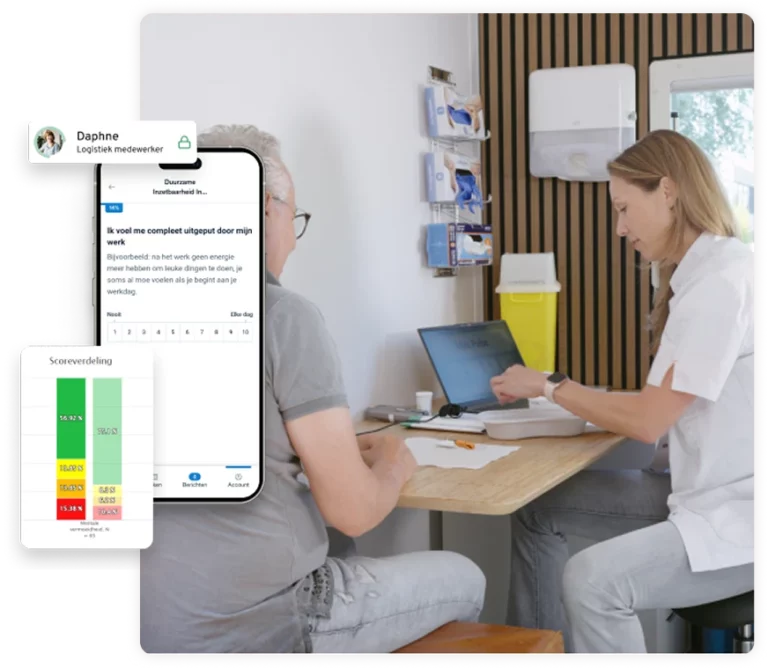
A Preventive Medical Examination (PMO) is required by law, but its true value lies in what you do with the results.…
Our consultants are ready to discover together how to create a healthy, safe and vital work environment in your company.
Request a quote Lisa Meddens
CEO of Simple Check
Lisa Meddens
CEO of Simple Check