




- We get a 9.2 from more than 3,000 reviews
- Digital dashboard with real-time insights
- ISO certified
Menu

Understanding the impact of prevention on absenteeism, job satisfaction and productivity
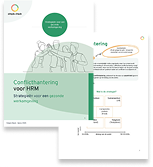
A manual based on proven methods such as TKI, coaching and mediation.

Learn how to effectively use the Sustainable Employability Index to strengthen your organization.


If 10 percent of Belgian adults switched to a more plant-based diet, our government would save nearly 1.3 billion euros over 20 years. So says Prof. Lieven Annemans, who teaches health economics at UGent (Belgium).

5-step plan for effective policy, including checklist.
"*" indicates required fields
More than 1,700 companies went before you. It's that simple. Check.
It's a question that is becoming increasingly relevant in our society. A plant-based diet offers numerous benefits: it improves your health, helps the planet and saves you money. In this blog, you will discover why plant-based eating is the right choice and how you can easily incorporate a more plant-based diet into your daily life.
To arrive at his findings, Professor Annemans analyzed the existing scientific literature. Many long-term studies already exist on the influence of nutrition on, for example, diabetes and heart disease. Annemans took a close look at those and then assumed two scenarios for the next 20 years: either people continue to eat how they eat now, or they switch to a more plant-based diet, such as the Mediterranean.
He concluded that if 10 percent of the Belgian population actually switches to a more plant-based diet, that comes out to a gain of 200 healthy years of life per thousand people over 20 years. Extrapolated to the entire adult Belgian population, that's 160,000 years of gain. And all those healthy years thus provide a saving for our government. One of no less than 1.3 billion euros.
It is enough to make sure that maximum one-third of what you eat is of animal origin. The other two-thirds should be of at least vegetable origin; nuts, seeds, fruits, legumes, vegetables, soy and olive oil. _Lieven Annemans, health economist
Choosing to eat plant-based foods does not mean you have to become a complete vegetarian. According to health economist Lieven Annemans, it is enough if only a third of your diet is animal-based and the rest plant-based. Consider foods such as vegetables, fruits, legumes, nuts, seeds and vegetable oils. These small adjustments make a big difference to your health and environment.
Prof. Lieven Annemans gave his explanations at a symposium marking the 20th anniversary of the Alpro Foundation. This independent institute was founded in 1996 with the aim of supporting scientific research on plant-based nutrition and promoting knowledge and awareness of nutrition and health.
According to Annemans, moreover, "daily intake of soy products as part of a plant-based diet gives similar results: if 10 percent of Belgian adults consumed soy products daily, it would bring the government over 1.5 billion euros over 20 years."
You can do fine without meat, if you eat good substitutes and other foods to get enough iron, vitamin B1 and B12. There are plenty of full-fledged plant products that you can eat instead of meat. Consider legumes, nuts, soy and ready-to-eat meat substitutes.
Less meat and dairy and more whole grain cereals, legumes, vegetables, fruits and plant-based meat substitutes reduce the risk of cardiovascular disease. At the same time, the production of grains, vegetables and fruits is more environmentally friendly in terms of greenhouse gas emissions and land use than meat and dairy production.
Want to make the switch? Here are a few practical tips:
The Mediterranean lifestyle is not only mentioned by Professor Lieven Annemans when it comes to healthy aging. Two Mediterranean countries are part of the five so-called blue zones, zones where large groups of people live to more than 100 years old, in good health. The Mediterranean diet varies from country to country. The original diet of Crete, for example, has different characteristics than that of Sardinia. But across the board, there are many similarities that ensure its positive effect on our health.
Broadly speaking, the Mediterranean diet looks as follows:
Vegetables, fruits, legumes and whole grain products contain a lot of fiber in addition to vitamins. As a result, carbohydrates are converted into blood sugar very gradually. Olive oil, nuts and fish contain many unsaturated fats, which are healthy for the heart and blood vessels.
Note that the Mediterranean diet is very different from the way we eat "Italian" here with big pizzas and plates full of pasta. Preferably don't take too much of that. In addition, it seems likely that the good health of the inhabitants of the Mediterranean is not only related to food. The lifestyle also plays into it. They are relaxed, take their time when eating, mostly grow their own vegetables and herbs and exercise regularly.
A varied diet is wise, even if you eat less meat. So alternate as much as possible between red meat, poultry, fish, egg and plant-based meat substitutes.
If you want to learn more about this topic, check out our blog: Discover the power of plant-based eating!
'Source: knack.be / vmt.nl / diabetesfonds / voedingscentrum'

As CEO of Simple Check, I am committed to helping organizations and employees work in a vital, healthy, and enjoyable way every day.
Working with Simple Check means clear insight into what is really going on within your organization.
We help companies get a handle on work stress, vitality, health and engagement so that employees stay healthier, more energetic and productive.

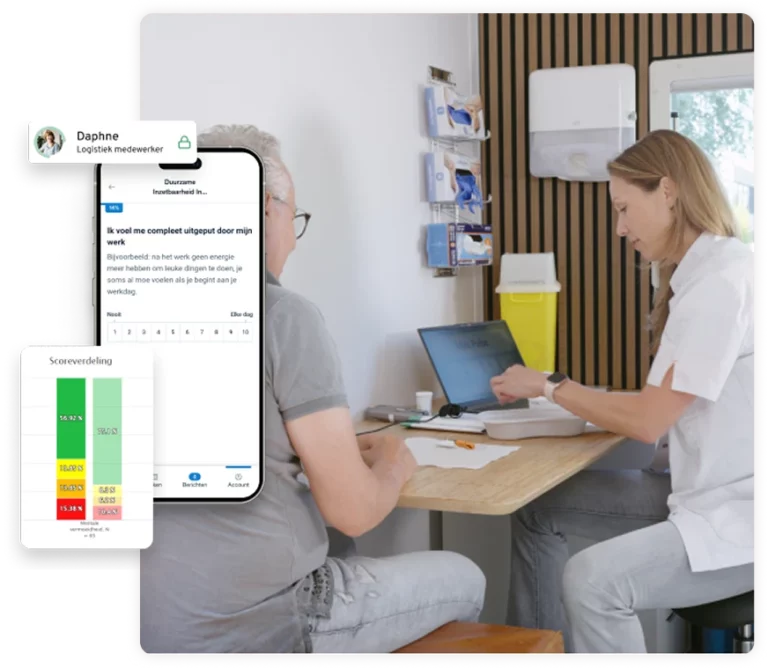
A Preventive Medical Examination (PMO) is required by law, but its true value lies in what you do with the results.…
Our consultants are ready to discover together how to create a healthy, safe and vital work environment in your company.
Request a quote Lisa Meddens
CEO of Simple Check
Lisa Meddens
CEO of Simple Check