





- We get a 9.2 from more than 3,000 reviews
- Digital dashboard with real-time insights
- ISO certified
Menu

Understanding the impact of prevention on absenteeism, job satisfaction and productivity
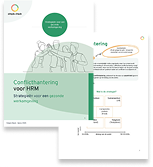
A manual based on proven methods such as TKI, coaching and mediation.

Learn how to effectively use the Sustainable Employability Index to strengthen your organization.


These days, everyone seems to be sensitive to at least one food substance, with gluten as a favorite. Against 2-3% of people with food allergies, 9% say they eat less gluten or even avoid it. It's not just fear of gluten, however, the peanut is also suffering. Over 13% of Dutch people say they have traded in peanuts for Brazil nuts, chia seeds and goji berries, the well-known superfoods. "It is clear that food hypes have changed," says Frans Kok - professor of nutrition at Wageningen University. "It used to be about weight-loss diets; in the 1990s I counted more than a hundred of them. Now it's about individual foods: wheatgrass, milk, oats, they are extolled or downplayed," says Frans. There is food confusion due to misinformation.


5-step plan for effective policy, including checklist.
"*" indicates required fields
More than 1,700 companies went before you. It's that simple. Check.
The love for sustainable, healthier products is growing. The report "Monitor Duurzaam Voedsel 2014" ( Sustainable Food Monitor 201 4) states that the number of people who prefer sustainable, responsible, and fresh products has risen for the fifth year in a row. This is a development that has most likely not gone unnoticed. That people with gluten intolerance, celiac disease, cannot eat chocolate, pasta, and bread is no longer the norm. Supermarket shelves are now full of organic, sustainable, and gluten-free products.
For people with Celiac disease, the increasing supply of gluten-free products is a godsend, but to what extent are such products healthier for those not diagnosed with a gluten allergy? When dining out with friends or family these days, nine times out of ten there is someone who "won't be eating gluten for the next few months.
There is so much information about what is healthy and unhealthy for you that we can no longer see the forest for the trees. We try everything to boost our health. We call this food confusion due to information overload. We buy into stories about superfoods, cut out carbohydrates, and eat gluten-free because (in most cases) we are told that this is the way to live healthier. But what should we believe when every health report claims something different?
Due to the enormous amount of information available about nutrition, we tend to look for explanations for health complaints at the slightest provocation. More than 40% believe that most foods are less healthy than they were twenty years ago, even though fruit and vegetables have actually become healthier in recent years. Professor of psychology Winfried Rief claims that negative reporting causes people to become overly concerned, which in turn reinforces complaints and anxiety. As a result, bloating after a plate of pasta or a glass of milk is now immediately linked to celiac disease, even though that may not be the cause.
"Then we can't eat anything at all?"
We are losing track. "Can we no longer eat anything at all?" is a thought that occurs to many people when a new report is published about the negative effect of food on our health. A good example is the report already published by the World Health Organization on health risks in processed meat. A clear, scientifically substantiated answer to the question of the extent to which these hazardous substances pose health risks would remove a great deal of uncertainty and ignorance.
Frans believes that if you eat enough vegetables, fruits, fiber, vegetable oil, dairy, fish and nuts and in moderation red meat, (un)saturated fat, salt, sugar and alcohol you can continue to eat anything. Unless you are really allergic to it of course. "Boring, yeah right," he says, "but that advice works. Actually, we should all go back to basics: what is healthy food? Because people think they know what healthy eating is, but research shows that often we just don't know. If we build a diet from the Guidelines good nutrition 2015, drawn up by the Health Council, then we would have both feet back on the ground.
The media plays an important role in today's understanding of nutrition. With the news about the healthy effects of superfoods, sustainable and responsible products, we have started to eliminate carbohydrates and gluten from our diet en masse. We are inundated with information about nutrition, leaving us ignorant of what is healthy. This ignorance creates confusion. We need to understand the extent to which nutrition protects our bodies or actually increases the risk of health risks. We need to get back to the basics of what is healthy nutrition? We need a healthy diet consistent with our behaviors that will actually make everyone live healthier lives.

As CEO of Simple Check, I am committed to helping organizations and employees work in a vital, healthy, and enjoyable way every day.
Working with Simple Check means clear insight into what is really going on within your organization.
We help companies get a handle on work stress, vitality, health and engagement so that employees stay healthier, more energetic and productive.

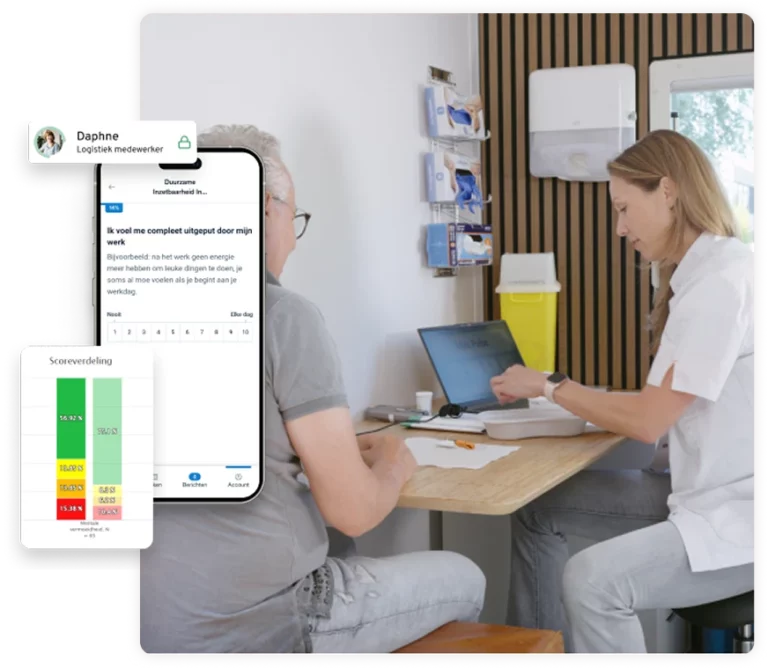
A Preventive Medical Examination (PMO) is required by law, but its true value lies in what you do with the results.…
Our consultants are ready to discover together how to create a healthy, safe and vital work environment in your company.
Request a quote Lisa Meddens
CEO of Simple Check
Lisa Meddens
CEO of Simple Check