


- We get a 9.2 from more than 3,000 reviews
- Digital dashboard with real-time insights
- ISO certified
Menu

Understanding the impact of prevention on absenteeism, job satisfaction and productivity
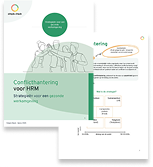
A manual based on proven methods such as TKI, coaching and mediation.

Learn how to effectively use the Sustainable Employability Index to strengthen your organization.


Dealing with health risks in the workplace The National Institute for Public Health and the Environment (RIVM) defines work-related health risks as follows: "Health damage that would not have occurred if the work had not been performed."

5-step plan for effective policy, including checklist.
"*" indicates required fields
More than 1,700 companies went before you. It's that simple. Check.
The National Institute for Public Health and the Environment (RIVM) defines work-related health risks as follows: "Health damage that would not have occurred if the work had not been performed." The definition helps determine to what extent the work or working conditions are the cause of the complaint and what measures reduce the complaint.
Every year, about 15,000 to 400,000 workers report sick due to workplace health injuries. From psychological complaints (over 6%) to musculoskeletal disorders, from hearing impairment to skin disease. Work-related health problems involve over 1.2 billion in costs annually. A high amount that needs to be reduced. Last month an article appeared in Trouw about the annual percentage (70%) of company doctors who do not report occupational diseases. While there are plenty of opportunities to treat disorders and, even better, opportunities that reduce their risk. The number of occupational diseases must and can be reduced, but how?
The construction, education, financial and healthcare sectors have an increased risk of long-term absenteeism due to work-related health risks. An important fact from the report "Occupational Diseases in Figures 2014.
The number of mental health complaints is on the rise. In 2013, the number of mental health complaints increased by 6% from a year earlier. Especially young people under the age of 25 report suffering from work stress, which increases the risk of overwork or burnout. Absenteeism is expected to increase in this target group. The prevention or timely detection of psychological complaints is therefore more than necessary. Such complaints are more complex than physical complaints, so the recovery process takes longer. The problem lies mainly in how the complaint(s) are handled. Two thirds of employees with psychological complaints continue to work. People hardly relate the complaints to work, so they put less energy into leisure activities. A missed opportunity, given that relaxation promotes the speed of recovery.
Employers are required to offer a preventive medical examination (PME) to its employees. A number of employers comply. In the construction industry, for example, the risk of occupational hazards for each employee is mapped annually and reported to the NCvB. The report "Occupational diseases in figures 2014" shows that 91% of occupational diseases in the construction sector emerged during a PME. In contrast, the other sectors are missing opportunities. A study by the bureau Panteia shows that only 11 percent of all employers in the Netherlands offer their employees a preventive medical examination on their own initiative. Reducing absenteeism, increasing productivity and reducing occupational diseases requires insight into employee health. Insight that encourages a healthier lifestyle.

As CEO of Simple Check, I am committed to helping organizations and employees work in a vital, healthy, and enjoyable way every day.
Working with Simple Check means clear insight into what is really going on within your organization.
We help companies get a handle on work stress, vitality, health and engagement so that employees stay healthier, more energetic and productive.
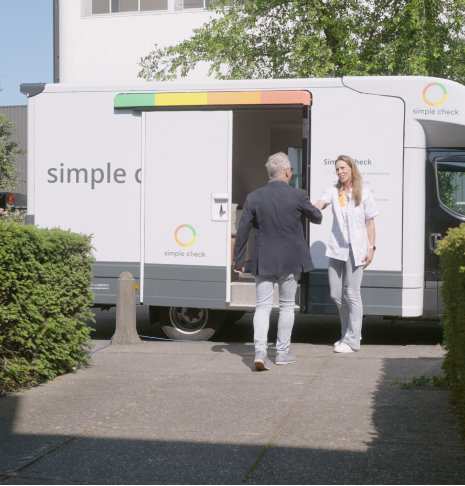
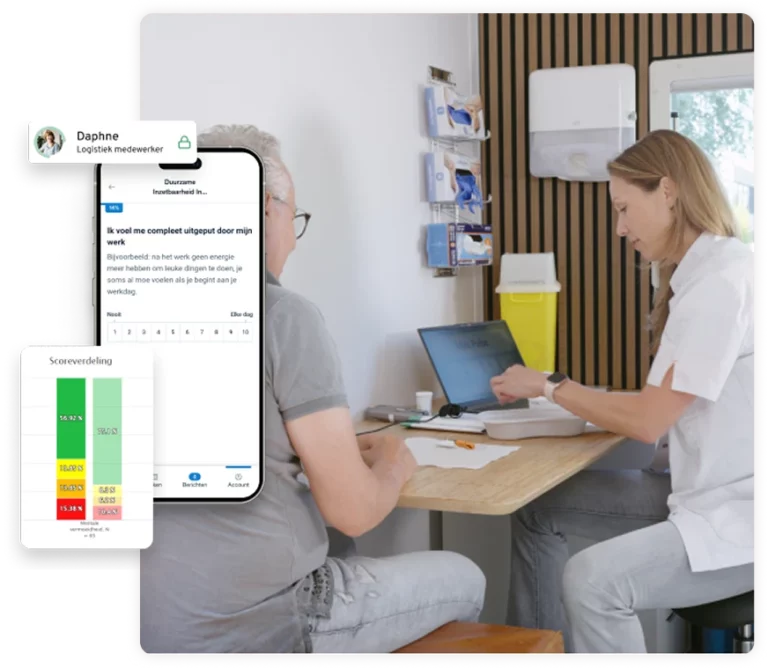
A Preventive Medical Examination (PMO) is required by law, but its true value lies in what you do with the results.…
Our consultants are ready to discover together how to create a healthy, safe and vital work environment in your company.
Request a quote Lisa Meddens
CEO of Simple Check
Lisa Meddens
CEO of Simple Check