





- We get a 9.2 from more than 3,000 reviews
- Digital dashboard with real-time insights
- ISO certified
Menu

Understanding the impact of prevention on absenteeism, job satisfaction and productivity
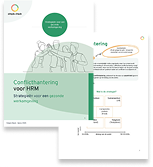
A manual based on proven methods such as TKI, coaching and mediation.

Learn how to effectively use the Sustainable Employability Index to strengthen your organization.


Are you aware of the fact that an employee's absence costs over €230 per day? This does not even include the additional consequences such as: decreasing productivity, higher workload, replacement staff and absenteeism counseling. We can therefore say that absenteeism costs a lot of money for the time being. Especially now that it appears that long-term sick leave is on the rise again in a number of sectors. A study by the research firm Vernet Absenteeism Network, for example, shows that in two years, long-term absenteeism in health care has increased by 18%. A worrying result. Time to once reduce absenteeism and get a sustainable financial grip.


5-step plan for effective policy, including checklist.
"*" indicates required fields
More than 1,700 companies went before you. It's that simple. Check.
More than half of workers in the Netherlands have no medical complaints at the time they call in sick. A CBS study shows that the majority do not appear at work because of private problems, financial worries or family circumstances. That employers are surprised by this outcome comes as no surprise to us. In our experience, employers often have no idea what is going on in the minds of their employees.
You might not say it, but this lack of interest costs money. After all, an employer is required to continue paying at least 70% of wages during the first 40 weeks of absence. How can this situation be avoided? By talking to employees. This way, as an employer, you create a sense of security and trust.
71% of employers underestimate absenteeism costs in. The average employer thinks they spend €143 per day per employee, but in practice we are talking about over €230 per employee. Companies therefore need more insight into their absenteeism costs per employee, so that they have a realistic picture of what they spend annually on absenteeism. With this insight, companies can then design their health policy effectively.
Fortunately, more and more companies are allocating budgets for health policies. One of the companies achieving (financial) success with an investment in health is multinational Ernst & Young.
Ernst & Young (EY) pays attention to the mental and physical health of its staff. With a well-organized health policy, EY managed to reduce its absenteeism by 0.3%. This result resulted in big financial windfalls, as 0.1% less sick leave equals a saving of €200,000 per year for EY.
According to Bea Haring, partner and member of the Executive Board, the success lies in the importance they attach to a good work-life balance. In this way, EY underlines that work pressure should not turn into work stress. "We can't change the workload, but we can help people deal with it better," Bea said. In addition to financial benefits and reduced absenteeism, EY's health program has provided:
Every year, the government makes funds available to companies that are committed to promoting a healthy corporate culture,known as the ESF subsidy. Companies that are struggling financially and facing high absenteeism costs are no longer left to fend for themselves. With the ESF subsidy, the government makes it easier for employers to raise awareness about health in the workplace. The company 'Pilz Nederland' has been able to finance a number of its health projects with the help of this financial support. They and dozens of other companies show that ESF works!
Would you like to make use of ESF funding, but are reluctant to go through the application process? Simple Check is happy to think with you about how you can increase your chances. Please contact contact with our advisors.
It is up to the employer in what way he wants to pay attention to health. Some want to comply with the legal obligation and therefore offer periodic preventive medical examinations. But there are also companies that want to encourage a healthy lifestyle in a creative, accessible way. Making employees aware of their lifestyle may require an investment, but there is a good chance that it will be recouped. We see that absenteeism is lower in companies that take a creative approach than in those that do it because they have to.
Is encouraging a healthy lifestyle just a formality for you? Think again, keeping in mind that you are no longer alone financially

As CEO of Simple Check, I am committed to helping organizations and employees work in a vital, healthy, and enjoyable way every day.
Working with Simple Check means clear insight into what is really going on within your organization.
We help companies get a handle on work stress, vitality, health and engagement so that employees stay healthier, more energetic and productive.

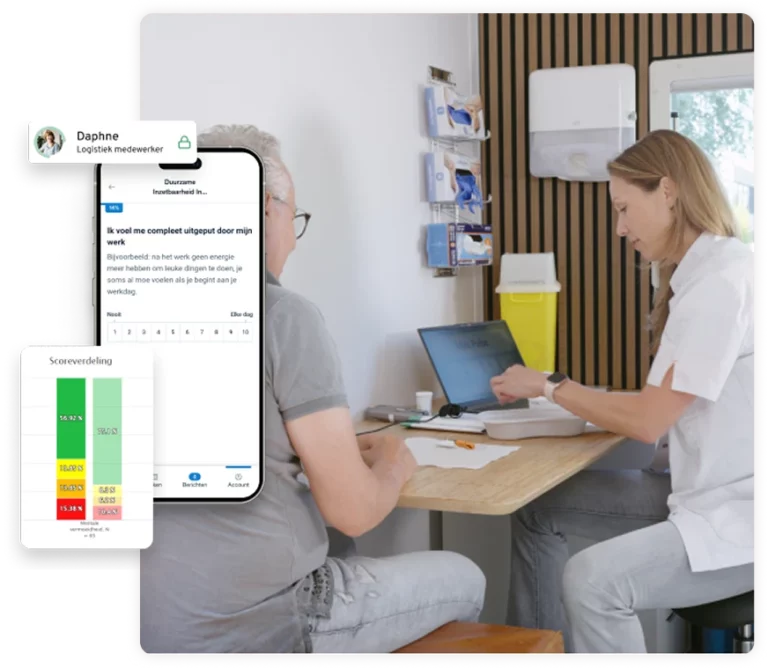
A Preventive Medical Examination (PMO) is required by law, but its true value lies in what you do with the results.…
Our consultants are ready to discover together how to create a healthy, safe and vital work environment in your company.
Request a quote Lisa Meddens
CEO of Simple Check
Lisa Meddens
CEO of Simple Check