




- We get a 9.2 from more than 3,000 reviews
- Digital dashboard with real-time insights
- ISO certified
Menu

Understanding the impact of prevention on absenteeism, job satisfaction and productivity
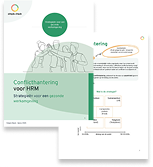
A manual based on proven methods such as TKI, coaching and mediation.

Learn how to effectively use the Sustainable Employability Index to strengthen your organization.


Performing different actions or processes at the same time is called multitasking. Writing a report, reading and answering incoming emails in the meantime and in between also trying to follow what your colleagues' conversation is about. Who doesn't do this? Multitasking seems efficient to many people. But the opposite is true. Researchers have shown: Multitasking not productive


5-step plan for effective policy, including checklist.
"*" indicates required fields
More than 1,700 companies went before you. It's that simple. Check.
When you try to perform several tasks simultaneously, brain activity actually jumps back and forth from one area to another all the time. Jelmer Borst, a doctoral student at the University of Groningen, concludes in his oresearch (2012) that working memory in our brain can only process one element at a time. If working memory has to perform several things at once, one of them moves to long-term memory.
When one task is completed, the other task must be retrieved from long-term memory first. So our brains are programmed to focus on only one thing at a time. Switching from one task to another takes time and energy and thus cannot possibly ensure that you are working efficiently and productively. So also, at the end of the day, you are much more tired if you are multitasking a lot than if you are only working on one task.
Because the results of many small tasks can be seen quickly, it creates the idea that multitasking is more efficient than tackling things one at a time. Also, by constantly completing small tasks, you are more likely to have a sense of accomplishment. Whereas, of course, it is much more satisfying when you have completed a big task that took a lot of time and energy. But because you don't feel this satisfaction right away, people tend to opt for the smaller tasks.
Neuroscientist Earl Miller says in The Guardian that multitasking causes a self-reinforcing chemical reaction in the brain. The immediate effect of multitasking is increased production of the stress hormone cortisol and the production of adrenaline. Over time, these can cause overstimulation of the brain. This overstimulation impairs the ability to focus. But it also releases dopamine upon successful completion of a task.
This is a pleasure hormone. This rewards the brain and basically encourages you to continue multitasking above all else. This combined with the lack of focus actually makes you more and more likely to get distracted by everything around you. A study at the University of California found that multitasking interferes with the brain's ability to absorb information. Also, people who frequently multitask are bad at ignoring irrelevant information, they frequently switch between tasks and have worse short-term memory. These are all skills needed when multitasking. Quite a negative spiral, in other words.
Doing multiple tasks simultaneously is fine as long as each task is performed by a separate brain area. The visual, auditory, vocal and motor brain areas can function just fine separately. Think of having a conversation while cooking or singing while driving. It only goes wrong when we want to do a number of complicated things at the same time in the same brain network.
You can also do two tasks at the same time just fine as long as one of those tasks goes on autopilot. A lot of daily recurring actions go on autopilot. We have done this action so many times that our brain can do it completely on its own. We no longer need to keep our conscious attention on it. Think, for example, of driving a car. How often has it happened to you that you got home, but can't quite recall how? You then did the driving on autopilot. Calling hands-free while driving you will probably be able to do so without any problems.
But note here: this applies only as long as no unexpected situations arise. If traffic suddenly becomes complicated, you have to use your working memory for traffic in addition to calling. Then a queue is created for incoming information. You can then let your working memory keep switching between the two tasks, but you are going to see, hear and also react much less. So performing multiple actions on autopilot is possible, but only up to a point.
So there are plenty of reasons to stop multitasking. But this can be quite a challenge. So how do you do this? Here are seven tips that can help.
We hope this article contributes to the degree to which you are working with focus. This will save a lot of energy, make you more productive and thus benefit both yourself and your employer!
Our 'Simple Checklist' is full of practical tips regarding effective and sustainable HR policies. Ask for our Checklist

As CEO of Simple Check, I am committed to helping organizations and employees work in a vital, healthy, and enjoyable way every day.
Working with Simple Check means clear insight into what is really going on within your organization.
We help companies get a handle on work stress, vitality, health and engagement so that employees stay healthier, more energetic and productive.


A Preventive Medical Examination (PMO) is required by law, but its true value lies in what you do with the results.…
Our consultants are ready to discover together how to create a healthy, safe and vital work environment in your company.
Request a quote Lisa Meddens
CEO of Simple Check
Lisa Meddens
CEO of Simple Check