




- We get a 9.2 from more than 3,000 reviews
- Digital dashboard with real-time insights
- ISO certified
Menu

Understanding the impact of prevention on absenteeism, job satisfaction and productivity
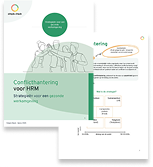
A manual based on proven methods such as TKI, coaching and mediation.

Learn how to effectively use the Sustainable Employability Index to strengthen your organization.


Dutch worker feels "healthy" "Employers should pay more attention to prevention of health risks and incapacity for work," a position Minister Asscher of Social Affairs and Employment released early this year.


5-step plan for effective policy, including checklist.
"*" indicates required fields
More than 1,700 companies went before you. It's that simple. Check.
"Employers should pay more attention to prevention of health risks and disability," a position Minister Asscher of Social Affairs and Employment released early this year.
Interest in health and prevention rose from 16% in 2014 to 34% in 2015. This shows that we are on the right track. However, despite this growing interest, the number of employers taking action remains low.
A previously published study by Arbo Unie shows that only 24% of employers indicate that they regularly check the health of their employees by means of preventive medical examinations.
An approach needed to prevent health problems or identify them in time. Thus, there is still much to be gained in this area.
91% of workers in the Netherlands say they feel healthy. For workers in the 55+ age group, this is true for 87%. This is not to say that workers do not have health complaints.
It is common to confuse good health with "I feel fit" and "I am enjoying myself at work. Employees may experience recurring health complaints despite indicating that they feel well.
About one-third of employees in the Netherlands suffer from work-related stress, and in addition, neck, shoulder, back and arm complaints are common. The longer these health complaints are ignored, the greater the chance that employees will eventually be unable to perform work. Their productivity drops and the likelihood of long-term absenteeism increases.
In 2022, 52.4% of adults aged 18 and older were overweight. This is a slight increase from 52.2% in 2021. The percentage of obese adults remained the same at 14.1% in 2022.
Jack Groppel, co-founder of the Human Performance Institute, explains: “People need to build up their energy capacity and constantly replenish it through sufficient sleep, exercise, proper nutrition, emotional connections, and rest. Energy recovery is therefore essential for people on a physical, mental, and emotional level. Managers have an important role to play in this.”
Absenteeism due to illness varies by sector, but was around 3.7% in 2015. The average duration of absence per employee was 6 days. Education, healthcare, public administration, and transportation generally have higher absenteeism rates.
It is mostly small businesses that miss opportunities around prevention. Not only can this be at the expense of staff health, but there is also a financial picture for the employer. The average amount for absenteeism due to health problems and occupational risks is €11.5 billion (Health and Safety Balance 2014) euros per year.
According to Statistics Netherlands (CBS), there are approximately 10 million employees in the Netherlands, which means that most sectors incur approximately €1,000 to €1,500 per employee per year in absenteeism costs. Reducing absenteeism due to illness is therefore an important focus for both large and small companies.
For example, if you invest in a health program of €150, - per person for 100 staff, you come to a sum of €15,000, -. If you spend €1500, - per employee per year on absenteeism costs, that means €150,000 for this group. Suppose you manage to reduce absenteeism by 10%, you already break even. So investing in health really helps!
Encouraging employee development, rewarding initiative and working in a safe environment is what Tony's Chocolonely invests in. With its approach, it has seen employee engagement increase, reduced absenteeism costs and increased sales. Reducing absenteeism costs has resulted in savings of over €10,000, so who can say "investing in health doesn't make sense"?
| 2010 | 2011 | 2012 | 2013 | |
|---|---|---|---|---|
| Turnover | 1.623.173 | 2.445.208 | 4.532.130 | 7.381.336 |
| Profit | 60.284 | -101.361 | 98.474 | 82.007 |
| Voluntary contribution | 47.280 | 117.604 | 207.400 | 302.312 |
| FTE | 2 | 2 | 6 | 13 |
| Absenteeism | - | - | 0,50% | 0,85% |
| Investment in employee welfare | 2.529 | 1.667 | 7.612 | 21.918 |
| Direct savings in absenteeism costs | - | - | 4.342 | 10.501 |
| Benefit Cost Ratio | - | - | 0,57 | 0,48 * |
*Each euro invested in 2013 yielded at least 0.48 euros in savings on absenteeism costs.
In addition to the financial benefit of healthy employees, a preventive approach ensures:
96% of the Dutch say they monitor their health in their own way. These include counting steps, measuring blood pressure or watching their weight. By capitalizing on this trend during work hours, you create more enthusiasm for a healthier lifestyle in addition to raising awareness.
In practice, employees during and after a health program are found to exercise more, eat healthier and take more time to relax. When the subject of health comes to life, it creates more energy and productivity in the workplace. In this way, employees not only want to continue working longer, but they can! Investing in health is a win-win situation for employers and employees.
Trend watcher Adjiedj Bakas explains: "Healthy living is going to become a lot more enjoyable in the near future. Humans are smart all-rounders, and we are finding solutions to more and more health problems. Bakas also predicts that employers will soon be able to continue paying sick employees for up to ten years. So it's also in your interest to keep your team fit."
The progress report of the National Prevention Agreement 2022 shows that there is still much work to be done to achieve these ambitions and goals. In the area of obesity, there has been a slight decrease, but the percentage of overweight and obese adults is still too high. In the area of problematic alcohol use, there has been a slight decrease, but the percentage of adults with problematic alcohol use is still too high.
In terms of smoking, there has been a slight decrease, but the percentage of adults who smoke is still too high.
Investing in health is an investment in the future of employees and employers.
According to Social Affairs and Employment Minister Asscher, the switch must be turned in 2020. It must become normal for employers to care about the health of their employees, according to the minister. In this way, we can reduce absenteeism and thus lower the high absenteeism costs per employee. Physical and mental health risks can be detected in time, allowing you to get ahead of unexpected employee dropout due to illness or disability.
Did you enjoy this blog? Then read“6 reasons to work on sustainable employability!”

As CEO of Simple Check, I am committed to helping organizations and employees work in a vital, healthy, and enjoyable way every day.
Working with Simple Check means clear insight into what is really going on within your organization.
We help companies get a handle on work stress, vitality, health and engagement so that employees stay healthier, more energetic and productive.
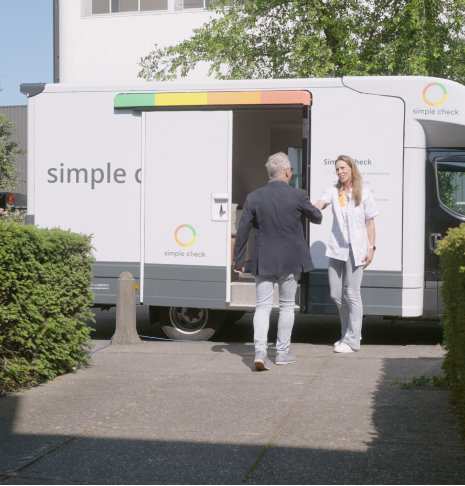
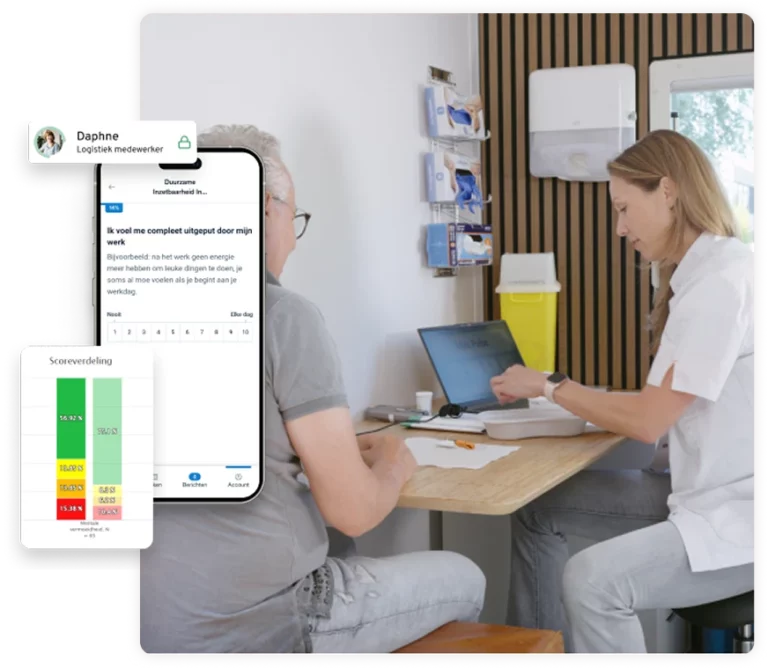
A Preventive Medical Examination (PMO) is required by law, but its true value lies in what you do with the results.…
Our consultants are ready to discover together how to create a healthy, safe and vital work environment in your company.
Request a quote Lisa Meddens
CEO of Simple Check
Lisa Meddens
CEO of Simple Check