



- We get a 9.2 from more than 3,000 reviews
- Digital dashboard with real-time insights
- ISO certified
Menu

Understanding the impact of prevention on absenteeism, job satisfaction and productivity
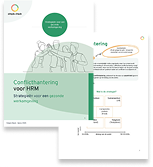
A manual based on proven methods such as TKI, coaching and mediation.

Learn how to effectively use the Sustainable Employability Index to strengthen your organization.


Burnout can occur when you feel that your life is too stressful. Therefore, it is important to look for balance. This balance provides energy. By not only focusing on your goals, but taking the time to increase your self-insight, you recognize emotions, create self-esteem and self-respect, and suffer less from fears and insecurities. With more self-knowledge and insight into your talents and pitfalls, you save yourself a lot of frustration and heartache. You experience resilience, peace and joy of life. In short: you enjoy the things you do.

5-step plan for effective policy, including checklist.
"*" indicates required fields
More than 1,700 companies went before you. It's that simple. Check.
Burnout can be a result of prolonged negative stress and a lack of joy in life. However, joie de vivre and satisfaction offer protection from this negative stress. When you feel happy, zones in our brain are developed that are responsible for positive thoughts and feelings. You can compare it to muscle training: the more muscles you train, the better you can use them. The more things you do that you enjoy, the more positive you become. In other words, joie de vivre comes from living the way you want. Achieving the feeling of joy in life requires self-insight on 3 levels:
I Understanding your talents and behaviors
Understanding what energizes you largely determines your behavior. What makes you happy? What makes you shine? How does that affect your behavior? When you know yourself and why you behave the way you do, it helps you keep your energy levels up.
II Be aware of your norms, values and beliefs
Most of the beliefs you unconsciously adopt from your environment. By regularly checking whether you live according to your own norms and values, you get to know your behavior better. Do you make choices based on what you find important or are you influenced by your environment? By having your own values clear and behaving according to them, you show what you stand for. Values form your intrinsic motivation and have a self-reinforcing effect.
III Get clear on why you make certain choices
Drives are what drive your behavior. They are the reason why you make certain choices. For example, if you enjoy helping others (social drive) and you are asked to do something for someone, you may say "yes" without asking yourself if you have time for it and what it will get you (practical drive). This may mean that your behavior is satisfying in the short term, but costs you too much energy in the long term. When you know which drives are important to you and which provide long-term energy, you will know how to take good care of yourself mentally.
Exercise reorganizes the brain, allowing your body to respond better to stress. The so-called neurotransmitters produced during exercise reduce cortisol (the stress hormone) in the body and regulate moods and emotions. This is why after physical exercise you are less nervous, hyperactive, and more relaxed. Self-esteem grows, which has a positive impact on your mindset and stress level.
Sleeping 7 to 8 hours a night prevents physical and mental exhaustion. Your body is better able to handle stressful situations after a good night's sleep. If you find that you have trouble falling asleep, make sure before you go to bed you are exposed to fewer stimuli. For example, don't look at a screen for an hour before bed, don't drink caffeinated beverages, go easy on alcohol and do things that relax you.
A regular and healthy diet helps your body cope better with stress. However, the composition is different for everyone. Some respond well to carbohydrates, while others need more healthy fats. Some feel better with 3 healthy meals a day, while others prefer to spread this out over 5 times during the day. In any case, make sure you get enough fresh vegetables (250 grams per day) and fresh fruit (2 pieces per day). Vegetables and fruits are rich in vitamins, fiber and minerals that lower cortisol in the body.
Of course, there are more solutions for experiencing less stress and increasing your resilience. Which solution works for you depends, among other things, on the bottlenecks in your life. Simple Check helps you on your way to a life where you can enjoy the things you do more. Through our Health Check we provide insight into the way you deal with stress at work and how you can possibly lower your stress levels and get more energy from your work. Curious about what we can do for you? Our Simple Check Team will gladly tell you more.
Burnout is a growing problem in the Netherlands. By 2022, 20% of workers aged 15-74 had burnout symptoms, up from 13.4% in 2015.
Interestingly, burnout complaints are more common among women (20.8%) than men (17.3%). In addition, younger workers between the ages of 25 and 34 have the highest rate of burnout complaints (25.8%), while among workers between the ages of 65 and 74 it is only 8.6%.
It is important to monitor these trends and take measures to improve workers' mental health. For more information and current figures, visit RIVM.

As CEO of Simple Check, I am committed to helping organizations and employees work in a vital, healthy, and enjoyable way every day.
Working with Simple Check means clear insight into what is really going on within your organization.
We help companies get a handle on work stress, vitality, health and engagement so that employees stay healthier, more energetic and productive.

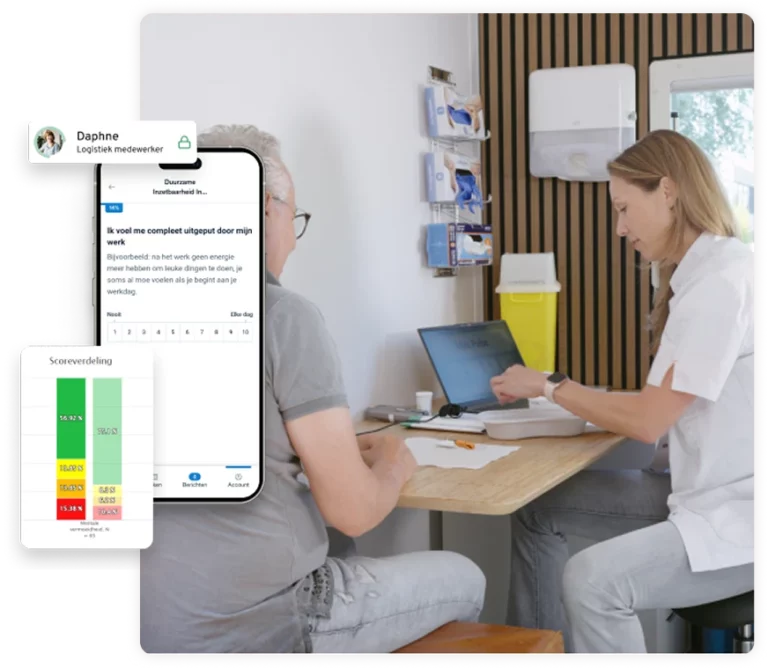
A Preventive Medical Examination (PMO) is required by law, but its true value lies in what you do with the results.…
Our consultants are ready to discover together how to create a healthy, safe and vital work environment in your company.
Request a quote Lisa Meddens
CEO of Simple Check
Lisa Meddens
CEO of Simple Check