





- We get a 9.2 from more than 3,000 reviews
- Digital dashboard with real-time insights
- ISO certified
Menu

Understanding the impact of prevention on absenteeism, job satisfaction and productivity
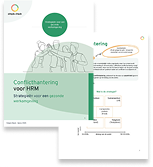
A manual based on proven methods such as TKI, coaching and mediation.

Learn how to effectively use the Sustainable Employability Index to strengthen your organization.


It is undoubtedly known that being happy contributes to experiencing and radiating positivity. This is also reflected in 'positive psychology'; a fully-fledged movement that primarily researches the optimal functioning of people. One of the most important findings of positive psychology is that 'well-being' (popularly called 'happiness') is an important predictor of optimal functioning.


5-step plan for effective policy, including checklist.
"*" indicates required fields
More than 1,700 companies went before you. It's that simple. Check.
Steering for employee happiness is an important strategic choice. Every euro invested on employee happiness pays for itself five times over. (Rath & Harter, 2010)
Research from Positive Psychology shows that happy employees:
Work occupies a central place in many people's lives. It is generally time-consuming, it is an important source of income, and, just as important, it fulfills needs for social contacts, appreciation and recognition, and self-development. Work is thus a significant factor in human happiness. This has to do with:
The foundations of happiness at work can be divided into:
Individual: Pleasure | Satisfaction | Competence | Autonomy
Organization: Trust | Connection | Meaning | Appreciation
So all of these components serve as important starting points, for both managers and HR professionals, to offer sustainable interventions on them. This can be in the form of an annual interview, training and workshops and creating awareness around these themes.
Despite the fact that work happiness has remained pretty much the same in recent years, it appears that workload has a major impact on work happiness. People with a high workload are:
As workloads increase, more and more people are experiencing stress and the absenteeism rate for private companies and the government in the Netherlands has risen from 4.7% in 2020 to 5.3% in 2023. Employees who indicated that the reason for their most recent absence was work-related, with workload as the main reason, were on average 38 working days away from work. An employee's average absence due to absenteeism is 17 working days. Of all workers who were absent because of work pressure, 33 percent were absent for long periods of time (20 working days or more). This is more than twice the average for workers who were absent from work.
As a result, unnecessary human energy flows away from organizations, resulting in lower levels of performance.
Results from the 2023 National Work Happiness Survey show that people who have a good understanding of their own talents do not necessarily always experience more work happiness. Hereto, it is also important that they feel appreciation from both their colleagues and their supervisors.
On the statement "My colleagues know my strengths sufficiently" (77% indicated that they did), people scored on job happiness as follows:
On the statement "My supervisor knows my strengths sufficiently" (70% indicated that this was true), people scored on job happiness as follows:
Besides the fact that not paying attention to the above themes comes at the expense of individual performance, it is also important to pay attention to this at the organizational level from a preventive point of view. Several studies show that dealing with happy people makes others happier. "Happiness is a collective phenomenon," says Chiel van der Linden, one of the organizers of "The Happiest Congress in the Netherlands. So the opposite can also happen.
As mentioned, research has shown that happy people are more productive and creative. They also handle stress better and are even less likely to be sick. This sounds like music to your ears, doesn't it?
By focusing on employee happiness and creating a corporate culture and environment that promotes happiness, the entire company flourishes. Happiness is strongly correlated with health. This is evident from the fact that happiness is a predictor of lifespan, regardless of previous health. Because health has a substantial effect on a happy life, this offers an interesting starting point for a preventive health policy aimed at sustainable employability. Collaborate with Simple Check offers a solution!
By gaining insight into topics such as 'personal leadership', but also into mental and physical health, the role of the manager, and the experience of job satisfaction and engagement, you create awareness at the individual level and, as an organization, you obtain important management information to adjust your policy. Simple Check not only offers interesting baseline measurements on all these themes, but also targeted interventions and follow-up processes.
Happiness is 40% determined by one's own behavior and thought patterns_.
Professor Sonja Lybuomirsky
University of California
https://tgthr.nl/kennisbank
https://tgthr.nl/gelukkige-medewerkers
https://positivepsychologyprogram.com/perma-model
https://personal.eur.nl/veenhoven/Pub2000s/2005e-fulln.pdf
The Art of Happiness at Work by the Dalai Lama & Howard C. Cutler

As CEO of Simple Check, I am committed to helping organizations and employees work in a vital, healthy, and enjoyable way every day.
Working with Simple Check means clear insight into what is really going on within your organization.
We help companies get a handle on work stress, vitality, health and engagement so that employees stay healthier, more energetic and productive.

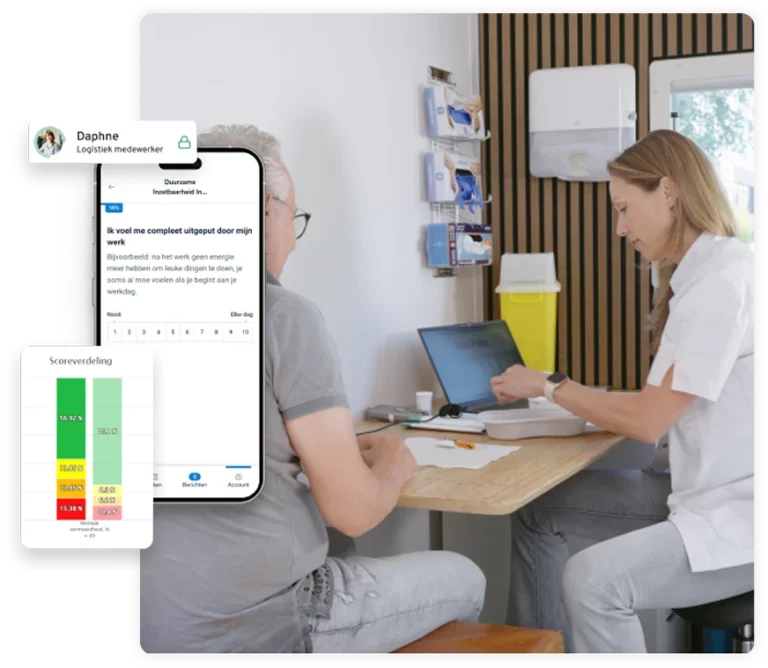
A Preventive Medical Examination (PMO) is required by law, but its true value lies in what you do with the results.…
Our consultants are ready to discover together how to create a healthy, safe and vital work environment in your company.
Request a quote Lisa Meddens
CEO of Simple Check