




- We get a 9.2 from more than 3,000 reviews
- Digital dashboard with real-time insights
- ISO certified
Menu

Understanding the impact of prevention on absenteeism, job satisfaction and productivity
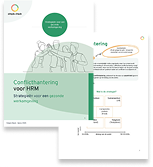
A manual based on proven methods such as TKI, coaching and mediation.

Learn how to effectively use the Sustainable Employability Index to strengthen your organization.


Being grateful makes you happier, even in the workplace. It is not always easy to stay and be optimistic and positive, and this is certainly due to the times we live in. Yet this was also experienced in other times and is not something that only applies now. It was also said and thought in the past that the times one lived in were not the easiest. The phrase "everything used to be better" certainly applies to a longer period of time than just now. So it is safe to say that it is always, at all times, important to work on your mental resilience. And one of those things that will help you do that is to pay attention to gratitude. Because being grateful for the things that do go well provide the bright spots in life. And if you manage to keep seeing points of light, even when things are not going so well, it can be very rewarding. Keep experiencing and noticing the positive things in your life and being grateful for them is not only good for your own well-being and health, but also for the atmosphere at work and the performance of your team.


5-step plan for effective policy, including checklist.
"*" indicates required fields
More than 1,700 companies went before you. It's that simple. Check.
By practicing gratitude, you train yourself to focus on what is going well. This not only improves your own well-being, but also has a positive impact on those around you, such as at work. An optimistic attitude is always contagious and inspires others, which benefits team dynamics and team performance, even during difficult times.
A study by the University of Central Florida found that when employees keep a gratitude journal, the atmosphere at work improves and colleagues show more respect in their interactions with each other. During this study, 350 participants kept track of the events they were grateful for over a two-week period. Colleagues then noticed that there was less gossip and less other negative behavior, such as bullying or exclusion, at work.
From another study, "The Big Benefits of Little Thanks," shows how gratitude can play an important role in strengthening team dynamics and cooperation. In this study, participants were asked to improve a student's cover letter. Half of them then received a letter in which the student expressed their gratitude and appreciation for the help. The other half received a neutral message from the student stating that the feedback had been received. The first group of participants were then twice as likely to say 'yes' to a request for help than the participants who had received the neutral message.
Showing appreciation not only increases feelings of recognition, but it also motivates others to be more engaged and willing to offer help. Multiple scientific studies on gratitude show that being grateful has a very beneficial effect, for both individuals and teams. By practicing gratitude, you focus on the positive things in your life. You are less concerned with what you don't have, and more concerned with what you do have and what you can do. This affects how you experience life (and therefore your work), but also how you approach your work and your colleagues.
It makes you happier, more resilient and even healthier. Being grateful makes you better able to cope with stress and setbacks and so you are less likely to experience depression, anxiety, loneliness or emotional instability. Studies like these emphasize the importance of cultivating a positive and supportive work environment in which gratitude and appreciation are expressed regularly.

You can easily start by naming 3 things you are grateful for at night, before you go to sleep. AND REMEMBER: it doesn't have to be that you actually feel or have felt grateful about it.
It can also sometimes be the case that you only realize later (i.e., the moment you stop to think about it) that that very moment was actually something to be grateful for. Think for example that you had a nice conversation with someone, that you had a delicious meal or that you were happy that you were able to finish something at work despite the busyness. You name it.
Repeat them a few times, even if that feels like "not really feeling anything like gratitude. Because it is important to realize that you are still practicing. And with that, chances are you may be able to think of it in your head but you don't feel it that way in your heart yet.
Thus, there are a number of other ways that will help you practice gratitude; 3 important tips:
Satisfaction is the answer to stress! By complimenting yourself and reflecting on what you have done well, even when you are under pressure or stressed, you will experience satisfaction. This will restore balance to your physical response to stress. By being grateful for what you have achieved or done, you will experience satisfaction. And that will help you learn to cope better with stress and pressure at work.
Ellen Rentenaar
Simple Check
It's good to see more and more scientific evidence of the many benefits of gratitude, and it's certainly worth incorporating into our daily lives and work. So even when it seems like everything is against you, it is crucial for your health to remember that there is always room to find gratitude and continue to see bright spots.
If you keep this up for a few weeks, you'll already notice a difference. You get better at noticing and enjoying the positive things in your life. Negative things you can deal with, resolve or put into perspective better.
At the individual level:
Gratitude is a powerful tool that has many positive effects, both at the individual level and within groups and teams. Practicing gratitude helps you focus on the positive aspects of life, which improves your overall well-being. It even increases your ability to cope with difficulties and protects you from negative emotions and mental health issues such as depression and anxiety.
At the team level:
Furthermore, expressing gratitude in teams can strengthen relationships, improve team dynamics, and promote collaboration. When people feel appreciated and recognized, they are generally motivated and willing to contribute to the collective goal.
If you, along with your colleagues and your supervisor agree that showing gratitude becomes a part of your collaboration and culture, you're going to find that the work atmosphere improves, there's more trust and mutual loyalty grows.
Would you like to learn more about the possibilities for increasing your mental resilience? Simple Check offers various coaching programs and workshops on these topics. Of course, all our interventions are also customized. This allows us to effectively meet the specific needs of a group or organization. The result is an effective and engaging learning experience! Feel freeto contactus for more information, without obligation!

As CEO of Simple Check, I am committed to helping organizations and employees work in a vital, healthy, and enjoyable way every day.
Working with Simple Check means clear insight into what is really going on within your organization.
We help companies get a handle on work stress, vitality, health and engagement so that employees stay healthier, more energetic and productive.

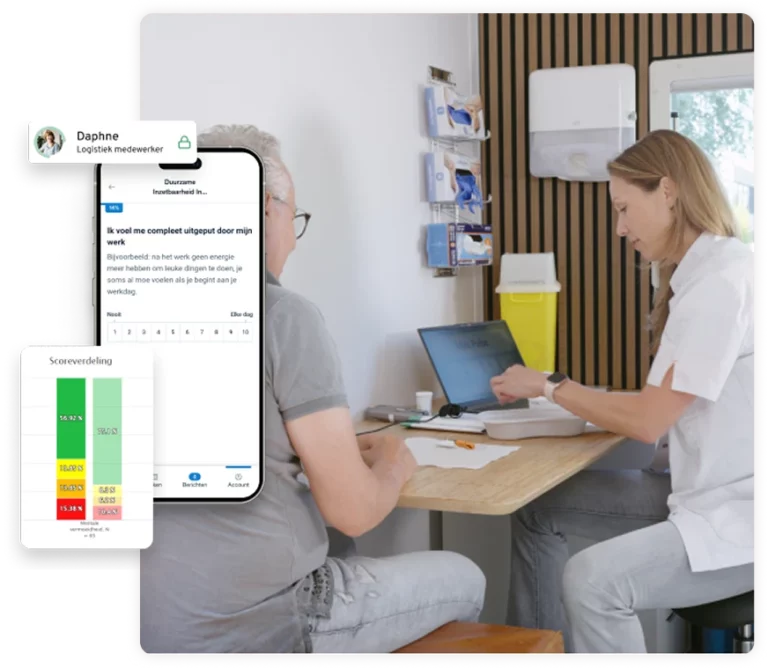
A Preventive Medical Examination (PMO) is required by law, but its true value lies in what you do with the results.…
Our consultants are ready to discover together how to create a healthy, safe and vital work environment in your company.
Request a quote Lisa Meddens
CEO of Simple Check
Lisa Meddens
CEO of Simple Check