



- We get a 9.2 from more than 3,000 reviews
- Digital dashboard with real-time insights
- ISO certified
Menu

Understanding the impact of prevention on absenteeism, job satisfaction and productivity
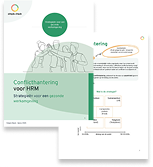
A manual based on proven methods such as TKI, coaching and mediation.

Learn how to effectively use the Sustainable Employability Index to strengthen your organization.


How do you handle talent development? Discover the 7 tips and how organizations can make work of employee health and development.


5-step plan for effective policy, including checklist.
"*" indicates required fields
More than 1,700 companies went before you. It's that simple. Check.
It is becoming increasingly clear that sustainable employability of employees is much more than primarily meeting the practical demands of work. This calls for companies and organizations that work on the health, engagement and development of their employees. In order to ensure more job satisfaction, less absenteeism and higher labor productivity.
Attention to talent development is an important part of this. This always contributes to the growth of both the employee and the company. Because you invest in the development of your employees, they can provide added value for your company now and in the future. This prevents knowledge from being lost and skills from becoming obsolete because of all the technological developments. You also ensure that people remain motivated at work.
In the "Sustainable Employability Index," TNO's questionnaire aimed at Sustainable Employability, this is a very important part of the whole scan, and for good reason. In this questionnaire it is explained as follows:
To be optimally healthy, safe and productive at work, an employee must have the right knowledge and skills. During the career, the fit between what an employee can/wants and what an organization requires/offers changes (Kristof, 1996). Interim work will therefore be needed to maintain the right knowledge and skills for optimal employability.
The following topics are asked about this:
A lack of professional knowledge is related to job insecurity, lower salary and job dissatisfaction. The higher the score, the better the knowledge and skills match the demands of current work.
This score indicates the extent to which a person's talents are well utilized in his or her work. The higher this score the better the work requirements match talents. When knowledge and skills come into their own in the work you do, this has a positive influence on job satisfaction, quality of work and health.
Proactive learning means the extent to which you are actively updating your professional knowledge and learning new skills. Nowadays you need different knowledge for many jobs than in the past. To keep up with changing demands in the job market and to remain an attractive employee for employers, it is important to keep developing yourself. In addition, your own wants and needs may also change and you may find that you can do more than is possible in your job.
Diverse research does show that developing talent is a key focus for most employers. At the same time, business owners struggle with how to go about this. Training and education is expensive and the available budget is often limited. On top of that, employers are often afraid of losing their expensively trained employees to competitors. But precisely by not investing in the development of your employees, you risk demotivating them. And that certainly doesn't pay off. After all, employees are your most important business capital. The more skilled your staff, the more successful and innovative your company.
Investing in talent gives you great rewards: sustainably employable staff, higher motivation and greater satisfaction. When you take employees seriously in their desire to develop themselves and continue to grow in their careers, they will get the best out of themselves and run a step faster when needed.
Remember: if you do nothing, you will actually be left with undertrained employees whose motivation and energy are completely gone.
Developing talent doesn't always have to cost (a lot of) money. Here are seven tips for effectively encouraging talent development in your company.
The basis for talent development is to be and stay in conversation with your people. In doing so, make sure you know where your employees stand in the organization. What image do they have of your company and your goals? What do they think is going well and what could be improved? How do they see their own role in it? What do they think they can contribute and what is needed to do so?
Here, too, the DIX offers good support. After all, this questionnaire clearly asks about 'self-direction' (to what extent do people take the initiative when it comes to talent development, for example), 'limiting factors' (what do you come up against in your current functioning) and, as mentioned above, what about pro-active learning?
Have these conversations with every employee at least once a year. And in addition, see if other times are possible for informal conversations, such as on the shop floor or over lunch. This will give you a good idea of what is going on in your company. In turn, your employees get the feeling that you take them seriously and that their contribution matters. That stimulates.
Make sure that career development is back on everyone's agenda. So that it is perceived as 'normal' to discuss this subject and to pay attention to it. It is also important here to give people the freedom to indicate, with confidence, whether or not they want to or can commit to their ambition and development. With the help of a career coach. With career development or employability, you ensure that your employees deepen their professional knowledge and skills. This allows them to grow and realize their ambitions. This is important for the continuity of your company. The more their talents surface, the more flexible and employable they will be within the organization.
Employees learn mostly on the job. But the longer they are in one position, the less the development will be. It is often very refreshing to learn from colleagues. It also appears that when people work alone in a room they miss connection in terms of development. You can stimulate this as an employer: e.g. have your employees give workshops to each other. Ask them to take turns presenting their knowledge and skills to colleagues. This way they learn from each other, but also develop their own talent for giving presentations. Preferably do this in a relaxed atmosphere, e.g. during a joint working lunch.
Are you struggling to find a good sparring partner for highly talented employees ("high potentials") within your own company? Then seek cooperation with other companies and set up a talent class. These can be companies within your own industry, but also outside it.
In consultation, map out a path for personal growth and provide the necessary preconditions, such as a coach. Your talented employees can exchange ideas and learn from each other with like-minded people. Moreover, by taking a look behind the scenes of other organizations, they broaden their horizons.
You can also develop employees' talents by encouraging them to attend networking meetings, seminars and conferences. Many industries have their own free networking meetings, and increasingly you can also attend a variety of knowledge sessions free of charge.
Seminars and congresses abound in the Netherlands, in every discipline. Sometimes they come with a hefty price tag. If that is an objection, you can consider having one or two employees attend a meeting. They in turn can give a presentation about it to colleagues for whom it is of interest. That way, everyone benefits and you keep the cost per person manageable.
Want to develop your employees' talent quickly and effectively? Then encourage them to take a training course via the Internet. The range of online training courses has grown considerably in recent years. Many of them are free, You can also have your employees attend a webinar. These are interactive online seminars. Participants can watch a webinar live and also ask questions in question-and-answer sessions. Many webinars are available via video-on-demand and therefore not time-limited.

Sometimes it will still be necessary to offer your employees training. Be critical: before you send an employee on a training course, make sure that the training is really useful for both sides. Does the training really help your employee do his job better? Does the training really match your company's needs? And do the costs outweigh the benefits? If you can't answer "yes" to these questions, it's better to find an alternative.
Often there are already many workshops, training and education that HRM already has "on the shelf" within the overall intervention offerings. On the other hand, it is also often the case that not everyone is aware of these. It can really help to put this into a clear system. You can think of an online portal such as the one offered by the company Johan BV. They specialize in developing software aimed at supporting and guiding an effective sustainable employability policy.
According to Maslow's (1943) time-honored theory, people strive for self-development. If this opportunity is not or not sufficiently provided in work, it can be at the expense of employee motivation. The extent to which one feels engaged and enjoys work is thus also a determinant of productivity and commitment. Finding the work meaningful or being proud of what you do and perform makes you enjoy going to work and want to keep working and want to make a maximum contribution in the process.
Developing talent should be on every organization's priority list. Effective talent development not only improves employee retention and team performance, but it is also a sign of being a good employer.
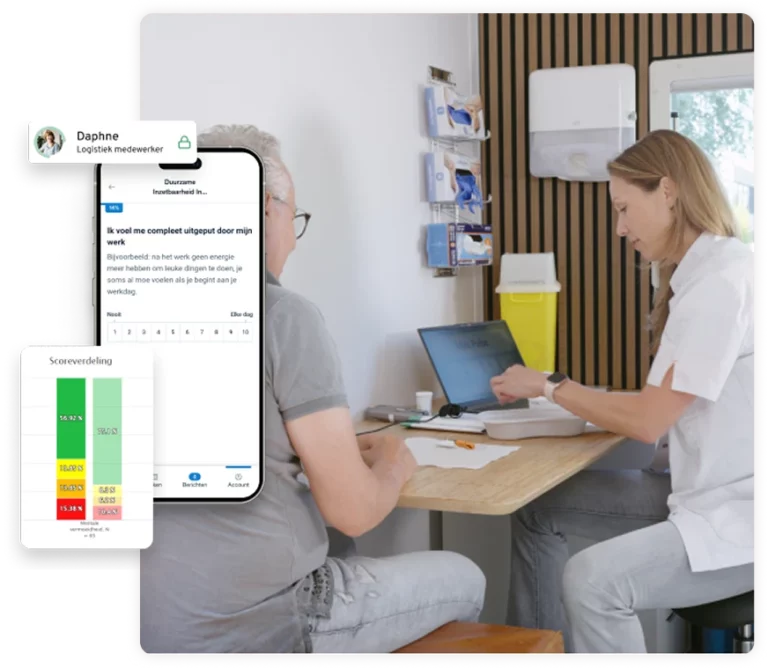
An effective way to monitor the motivation and skills of your employees is, as mentioned earlier, the DIX. This tool was developed to gain insight into the (development of the) sustainable employability of workers. TNO researcher Linda Koopmans:
"The DIX is a very suitable instrument to give employees insight into their own sustainable employability, and also to gain insight into sustainable employability at the departmental or organizational level. This provides starting points to work with so that sustainable employability can be improved within an organization."
Are you interested in offering the DIX or in policy plans around talent development? Our consultants in the field of sustainable employability will gladly take you through the possibilities and creative solutions. So feel free to contact us!

As CEO of Simple Check, I am committed to helping organizations and employees work in a vital, healthy, and enjoyable way every day.
Working with Simple Check means clear insight into what is really going on within your organization.
We help companies get a handle on work stress, vitality, health and engagement so that employees stay healthier, more energetic and productive.
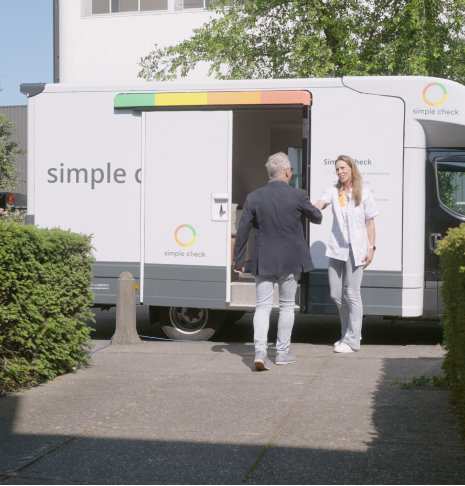
A Preventive Medical Examination (PMO) is required by law, but its true value lies in what you do with the results.…
Our consultants are ready to discover together how to create a healthy, safe and vital work environment in your company.
Request a quote Lisa Meddens
CEO of Simple Check
Lisa Meddens
CEO of Simple Check