



- We get a 9.2 from more than 3,000 reviews
- Digital dashboard with real-time insights
- ISO certified
Menu

Understanding the impact of prevention on absenteeism, job satisfaction and productivity
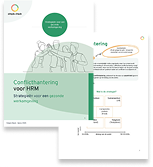
A manual based on proven methods such as TKI, coaching and mediation.

Learn how to effectively use the Sustainable Employability Index to strengthen your organization.


Self-confidence is a realistic view of your own abilities; the confidence that you can handle tasks and obstacles by yourself. And the confidence that it is okay even if there are things you are not good at. Feeling worthy at all times is an important condition for self-confidence.


5-step plan for effective policy, including checklist.
"*" indicates required fields
More than 1,700 companies went before you. It's that simple. Check.
Many people have, unnoticed, a great lack of self-confidence. One of the causes of this is that many people have been raised with the idea that anything they want is possible; as long as they put in enough effort and know how to enjoy it. In addition, it is often the case that they do not look at themselves with mildness and compassion. They find it unacceptable that there are things they apparently can't do very well anyway and so there are many moments they really don't (or no longer) enjoy. They often find that "stupid of themselves. This often indicates a lack of self-knowledge and self-confidence.
In addition to a person's personality, the social environment is very important in the development of self-confidence. For example, if you were raised in a very protective way, you may not have learned to deal with setbacks, form your own opinion and undertake things on your own. Later, this may manifest itself in the fact that you do not dare to take much initiative, or to express your opinion, because you are afraid that someone else will think something (stupid) about it.
As a result, you achieve little to no (noticeable) successes and do not get confirmation that you can really do something. Self-confidence declines even more and this results in even fewer positive experiences. Thus you unwittingly end up in a negative spiral.
The same can occur when people around you have criticized your behavior or performance, or when you have been bullied. These too are causes that can cause you to doubt yourself and shy away from things, causing self-confidence to decrease or not develop enough.
In positive psychology, the theory is that self-confidence is a balance between skill and dignity. William James, one of the founders of modern psychology, saw self-confidence as the ability to achieve success. By practicing, you can increase certain skills and this increases your self-confidence. But what if you fail to increase certain skills, or you don't get compliments on them? Self-confidence can then disappear in no time.
Therefore, it is important to also work on your dignity. This means that you value yourself, even though there may be no achievement in return.
When you lack self-confidence, you can't change it overnight. It takes time and attention. But it's worth it! With the tips below, you can take concrete steps to increase self-confidence.
1. Be aware of your thoughts.
The reason for your insecurity in a situation is that you have certain thoughts about it. What your thought is about a situation makes how you feel. It is important to be aware of this and learn to recognize these thoughts so that you can change them. So practice with that. Think of a situation in which your self-confidence let you down:
2. Provide thoughts that help you.
A helping thought is positive and realistic. When you lack self-confidence, you are likely to have frequent non-helpful thoughts. "I can't do it" or "Everyone thinks it's stupid when I say something" are examples of thoughts you may have. These thoughts are not realistic. It is important to learn to reverse these thoughts in order to regain a truthful view of reality and develop your self-confidence. In short, practice turning these non-helpful thoughts into helping thoughts.
3. Ask three people: "When do you see me shine?"
Think family, friend and/or colleague. If you don't dare ask this in person, there are plenty of ways to do this another way. Often people enjoy sharing this with you, just watch out! Next, it's important to consciously reflect from time to time that when you shine it ultimately means that you are doing "something" right. So dwell on what you are doing well. When you will think about this more and more, you will eventually experience it consciously, and through this your self-confidence will grow.
4. What it means to be "proud of yourself.
Do you have a judgment about this? Is it a negative judgment? Then you can try to turn this (limiting) belief around. By thinking: what happens when I am proud of something? Chances are that if you are proud of something, someone else will enjoy seeing and experiencing it. Especially someone who does not have much self-confidence will not easily become arrogant or something along those lines. And what do you think about another person telling you that he or she is 'proud' (read happy!) of a result achieved?
When something has been very nice because it went so well? Does that make you happy too? Does the other person then radiate joy and positivity? They probably do!
5. Learn how to accept yourself as you are.
Rely on your own strengths. Everyone is different, and that's a good thing. There will always be people who are very enthusiastic about your ideas and people who are less enthusiastic. And that's fine. Be aware of that.

As CEO of Simple Check, I am committed to helping organizations and employees work in a vital, healthy, and enjoyable way every day.
Working with Simple Check means clear insight into what is really going on within your organization.
We help companies get a handle on work stress, vitality, health and engagement so that employees stay healthier, more energetic and productive.

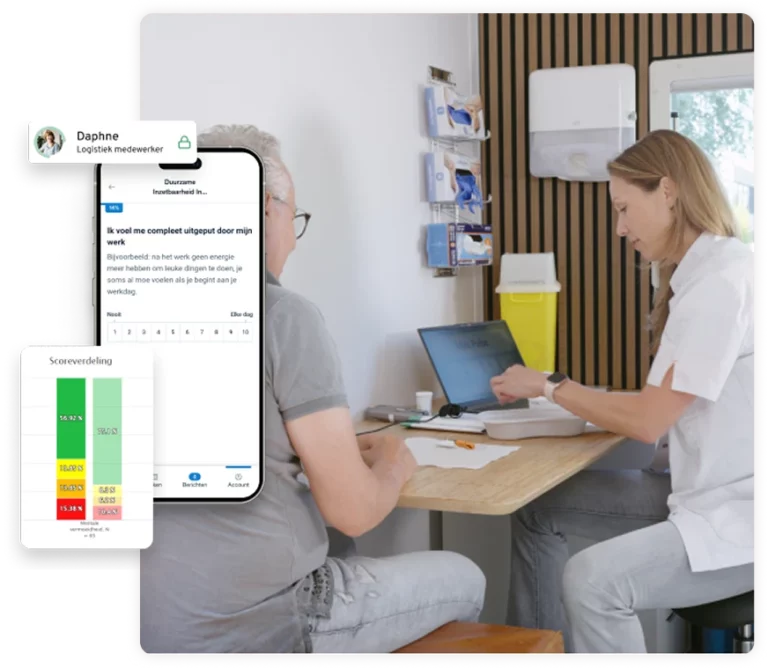
A Preventive Medical Examination (PMO) is required by law, but its true value lies in what you do with the results.…
Our consultants are ready to discover together how to create a healthy, safe and vital work environment in your company.
Request a quote Lisa Meddens
CEO of Simple Check
Lisa Meddens
CEO of Simple Check