





- We get a 9.2 from more than 3,000 reviews
- Digital dashboard with real-time insights
- ISO certified
Menu

Understanding the impact of prevention on absenteeism, job satisfaction and productivity
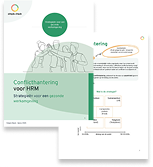
A manual based on proven methods such as TKI, coaching and mediation.

Learn how to effectively use the Sustainable Employability Index to strengthen your organization.


By now it is clear how important it is to have an ongoing focus on health and vitality. This applies to both employers and employees. And that requires new knowledge and insights.

5-step plan for effective policy, including checklist.
"*" indicates required fields
More than 1,700 companies went before you. It's that simple. Check.
Every day we enter into discussions with companies about their vision and policy on sustainable employability. Almost all of them consider the health and employability of employees to be very important issues. Yet they are not always satisfied with their results in this area. Budgetary constraints play a role, but the major bottleneck seems to be a lack of insight. For example, it appears that employers often do have one-sided information about employee health (e.g., from PME or satisfaction surveys) but that there is a need for more knowledge in order to convert the data into an effective health policy.
The step of making health risks negotiable in the organization is a tricky one. Many employers and managers find it difficult to understand the lifestyle and related choices (and the health risks associated with them) of employees. After all, what can be discussed and what cannot? And who is responsible for what? At the moment you see this lack of clarity a lot in the choices that (have to) be made to organize working from home as well as possible. Who takes care of the right workplace at home? And how to monitor that remotely? In addition, it often turns out that although the right resources are available at the workplace, they are not used properly.
A second bottleneck is the lack of knowledge and understanding about the causes of health problems. Both among the employer and the employee. To what extent are people aware of the relationship that exists between mental and physical pressure? Consider topics such as informal care, financial situation and work-life balance.
Employers and employees also often differ on the scope and opportunities employers have to promote staff health. For example, a common observation is that there are many interventions on the shelves in HRM, but they are hardly used, if at all. And that's a shame. This creates the perception on the part of the employer that there is not enough enthusiasm to actively work on their own sustainable employability and/or the perception on the part of the employee that nothing is being done to take this step.
Health and lifestyle generally remain sensitive topics. The positive impact of discussing them is not always recognized by everyone. It is therefore not surprising that it takes a while before people are enthusiastic about a health policy. The more people are behind a proposal, the more you get done. This applies to both management and the employee. In addition, if the employee is enthusiastic about the plan, management is more likely to follow. After all, employees make the company. However, co-workers may also be resistant. So make sure everyone sees the point and feels the need.
The last point we zoom in on the needs of the employees and the offer from the employer. It is not always the case that these fit together seamlessly. This is also not possible because every person is different and also develops all the time, so different needs may arise. This is often overlooked when realizing an intervention package from the employer side. It is therefore important to gain a good understanding of what is going on, and what needs go with it.
You don't create an effective health policy alone!
By choosing Simple Check, everything comes together. Because Simple Check offers a solution for all the bottlenecks mentioned above. This gives you all the handles, tools and insights needed to achieve an effective health policy.
Read more about the bottlenecks and the solutions in our white paper!

As CEO of Simple Check, I am committed to helping organizations and employees work in a vital, healthy, and enjoyable way every day.
Working with Simple Check means clear insight into what is really going on within your organization.
We help companies get a handle on work stress, vitality, health and engagement so that employees stay healthier, more energetic and productive.

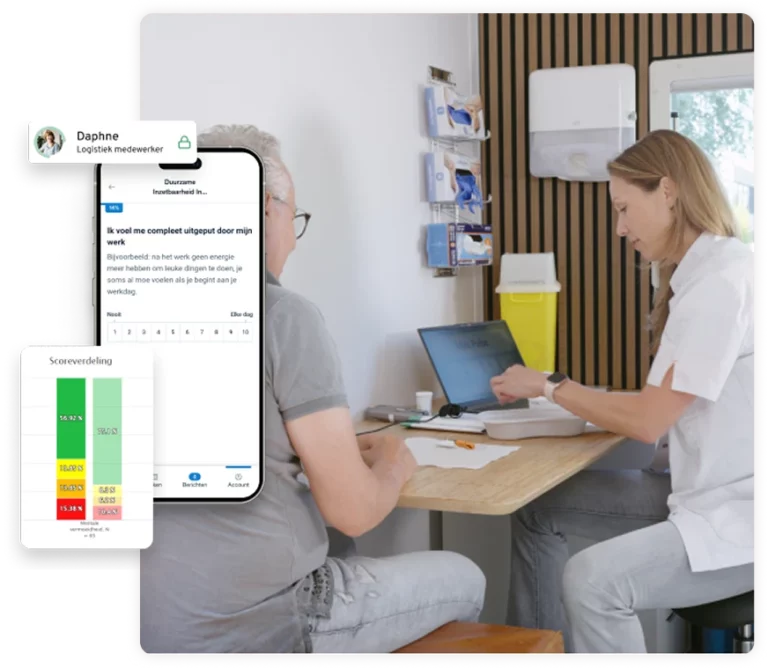
A Preventive Medical Examination (PMO) is required by law, but its true value lies in what you do with the results.…
Our consultants are ready to discover together how to create a healthy, safe and vital work environment in your company.
Request a quote Lisa Meddens
CEO of Simple Check
Lisa Meddens
CEO of Simple Check