





- We get a 9.2 from more than 3,000 reviews
- Digital dashboard with real-time insights
- ISO certified
Menu

Understanding the impact of prevention on absenteeism, job satisfaction and productivity
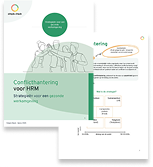
A manual based on proven methods such as TKI, coaching and mediation.

Learn how to effectively use the Sustainable Employability Index to strengthen your organization.


A sustainable employability policy focuses, among other things, on a healthy lifestyle. And that, when all is said and done, is of interest to everyone. Yet a sustainable employability policy can be perceived as meddlesome patronage. Autonomy (self-direction and freedom of choice) is one of the highest values in our society. People experience a primary responsibility for their own lives and health. Measures from the government or companies that limit choice are therefore quickly seen as a violation of autonomy. This makes it difficult to exert outside influence. Controlling behavior without being perceived as patronizing therefore means that there must be sufficient freedom of choice. This insight is both interesting and important to take into account when choosing your sustainable employability policy.


5-step plan for effective policy, including checklist.
"*" indicates required fields
More than 1,700 companies went before you. It's that simple. Check.
A poll conducted by Maurice de Hond in 2008 showed that three-quarters of Dutch people think it is fine for the government to take measures to improve the health of citizens. However, when it comes to concrete examples, such as the "fat tax" and the smoking ban, people are somewhat less positive. Those surveyed who live unhealthier lives are less enthusiastic about health-promoting government intervention.
Of those who are overweight, 57% are against meddling; of smokers, 44% are against it. More than half of the respondents feel that the government is patronizing with these kinds of decisions. So here too we see a tendency to see interference as patronizing. The 'danger' of wanting to influence behavior aimed at healthy lifestyles is therefore that not all behavioral changes are easily achievable.
For example, you can talk about behavior change but also about addiction counseling in which it is about quitting smoking, alcohol or sugar, for example. In cases like these, resistance will also increase and a policy will more often be perceived as patronizing.
In order to encourage sustainable behavior among employees and colleagues, it is important to understand how behavior is formed. What is the current behavior and what stands in the way of healthy behavior? There are many different ways of looking at behavior and behavioral change.
"Research shows that a broad, multidisciplinary approach increases the impact of public policies to promote sustainable consumption (Wilson & Chatterton, 2011)."
You can draw this more broadly. Companies can also take this approach when it comes to choosing in a sustainable employability policy.
To ultimately determine which policy instruments will be most appropriate in which situation, more insight into behavior is needed. Knowledge of underlying behavioral theories helps with this. We delve into the following 3 behavioral theories:
For a long time, government environmental policy was based on the assumption that consumers act a certain way because they do not have the right information regarding the consequences of their behavior.
This thinking stems from neoclassical economic theory, which is based on the assumption that consumers make rational decisions based on preferences and a conscious consideration of facts. This theory assumes planned behavior in which there is a linear relationship between knowledge, attitude and behavior.
During the second half of the twentieth century, there is increasing scientific evidence (Tverksy & Kahneman, 1974) that consumers are far more likely to be guided by irrational, unconscious processes than to make rational trade-offs.
This is mainly due to the fact that people have limited cognitive capacity and are unable to rationally process all the information and arguments that come at them.In many cases, therefore, people act from an instinctive, fast thinking system rather than a reasoning, slow system (Daniel Kahneman, Thinking Fast and Slow,2011)
Two examples of psychological processes, which can affect consumer behavior:
Consumers who make decisions based on the automatic system use heuristics or rules of thumb. The advantage of this is that, despite limited cognitive capacity, consumers can still make a large number of meaningful choices. The disadvantage of the automatic system is that consumers are less able to process new information and therefore tend to maintain habitual behavior. Even if that sometimes has harmful consequences for themselves. People also tend to pay more attention to information that confirms their opinions.
Cognitive dissonance is the uncomfortable feeling people experience when beliefs, attitudes or behaviors conflict with each other. People tend to eliminate this uncomfortable feeling by modifying existing attitudes and beliefs, or creating new ones. In some cases, behavior change can be encouraged by asking people about their inner beliefs and then confronting them with their behavior (responding to cognitive dissonance).
This method of confrontation works only when people are first complimented on something they do well to save their ego. Otherwise, they are more likely to adjust their beliefs rather than change their behavior.
Carlijn Brouwer, sustainable employability consultant, provides an example: "You see this in hazing rituals at student associations, among other places. What I have to endure now isn't fun, but the association must be really enjoyable since I'm willing to put up with this."
The social environment is also an important entry point for prevention. Sociological theories focus on the influence of the environment on the individual. They assume that people are forced into patterns of behavior by physical, economic and social conditions. The options people have for healthy living all affect behavior. While the responsibility of the individual should not be underestimated, it is important to appreciate the influence the environment has on the individual.
The employer can play a role in facilitating and motivating healthy choices. This can be done through environmental measures. For example, not only parents and friends, but also colleagues and supervisors have a very important influence on behavior.
Preventive measures that also or specifically target the social environment prove to be more effective than those that do not. People are guided not only by their personal preferences, but also by what others say about them and by unwritten "rules of the game.
In several spearheads, it has been shown that an integrated, long-term approach, focusing on both the environment and the individual, seems most effective in reducing the prevalence of risk factors. A good example is the policy aimed at smoking, which has also led to visible health effects in recent years.
"These scientific insights mean that not only the rational, conscious route of influencing behavior must be taken into account. The pathways that respond to unconscious and automatic processes must also be taken into account.
The employee can therefore not only be managed by a policy that appeals to reason and reasonableness as was once thought, but precisely and more often by mechanisms of psychological influence." _aldus Ellen Rentenaar, DI consultant, coach and trainer at Simple Check.
Changing behavior sustainably is far from easy. Individual behavior is deeply embedded in social and institutional contexts. Here it is important to know when something is perceived as patronizing. You can prevent this by giving employees space. Space to set their own goals and create togetherness.
At the same time, employees must above all be inspired and facilitated. Inspire by having a clear vision of the contribution towards a sustainable employability policy of your organization.
A contribution in which the employee can identify and with goals that the employees are eager to achieve. Facilitating by creating the right preconditions. The right resources, but also the opportunities to cooperate in their own way, both internally and externally.
Workers themselves must therefore work to become truly sustainable. They have to change their behavior themselves. This requires the workers to take control. Organizations have a great interest in employees taking their own direction. In order for an organization to properly manage the self-direction of employees, it is important that there is clear communication around this subject.
On the one hand, employers want employees to take their own direction, but on the other hand they also want to manage this. It is important to pay attention to this so that there is no sense of contradiction. This task lies with both managers and HR. Research shows that increasing personal control works well to stimulate health and vitality.
Sustainable employability requires workers to change their behavior. But how can you strengthen employee ownership of sustainable employability?
Various intervention functions are used to successfully change behavior in the area of sustainable employability. Below are theeightmost importantintervention functionsthat can contribute to behavioral change:
The above eight intervention functions focus on changing one of the following three elements to achieve behavior change: Can, Will and May.
Good human resource management in DI thus has three core tasks:
Simple Checkcan advise and support you in this process, from start to finish. We not only encourage a healthy lifestyle, we do much more than that. Are you curious about what we can do for your organization? Feel freeto contactus.

As CEO of Simple Check, I am committed to helping organizations and employees work in a vital, healthy, and enjoyable way every day.
Working with Simple Check means clear insight into what is really going on within your organization.
We help companies get a handle on work stress, vitality, health and engagement so that employees stay healthier, more energetic and productive.


A Preventive Medical Examination (PMO) is required by law, but its true value lies in what you do with the results.…
Our consultants are ready to discover together how to create a healthy, safe and vital work environment in your company.
Request a quote Lisa Meddens
CEO of Simple Check
Lisa Meddens
CEO of Simple Check