





- We get a 9.2 from more than 3,000 reviews
- Digital dashboard with real-time insights
- ISO certified
Menu

Understanding the impact of prevention on absenteeism, job satisfaction and productivity
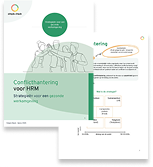
A manual based on proven methods such as TKI, coaching and mediation.

Learn how to effectively use the Sustainable Employability Index to strengthen your organization.


Our natural clock ensures that bodily processes such as blood circulation, respiration, oxygen intake, heart rate, body temperature, energy regulation and digestion take place in a (normal) 24-hour rhythm; of activity, rest and recovery.


5-step plan for effective policy, including checklist.
"*" indicates required fields
More than 1,700 companies went before you. It's that simple. Check.
Working during the night disrupts our natural biological clock. "This 24-hour rhythm is also called the circadian rhythm," said Tom de Boer, a researcher at Leiden University Medical Center. That biological clock relies mainly on light coming in through the eyes. So based on how much light there is, the clock knows that it is day or night and what the body should do then. For example, toward evening, the hormone melatonin is produced by the body, which causes us to become sleepy. By morning, this actually decreases. Working night shifts causes the body to follow a different rhythm.
The points below are clearly related to a disturbed 24-hour rhythm.
With all this in mind, it is important to remember that the effects of working night shifts can vary greatly from person to person. It really matters whether you are a morning person or a night owl. Susceptibility to sleep problems can also vary considerably. This means that some people can cope with night shifts much better than others. However, it has been found that sleep problems occur more frequently above a certain age (40-45 years). This may be related to changes in the biological clock as we age. Complaints may also become more severe the longer someone has worked night shifts.
One can safely conclude that there are risks associated with regularly working night shifts. Exactly how much impact the shift and night shifts have on our health is unknown. Much more research is needed for that.
For people who work night shifts, it is important to do so as healthily as possible. By nature, our body is in rest mode at night. So this also applies to the digestive system. 'To avoid nutritional problems, simply resist temptation. Try to eat healthy and light,' advises De Boer. Some tips include:
"Given that around 17 percent of the Dutch working population regularly works night shifts, it is important that we properly assess the health consequences in order to prevent damage," says L. van Amelsvoort of Wageningen University, who obtained his PhD last April with a thesis on physical changes in people who work shifts. Simple Check offers a possible supplement to this. Thehealth check providesinsight into both mental and physical health. In this way, health can be mapped out and tools are provided to take timely action.
Source: Volkskrant, November 4, 2014
https://www.scientias.nl/de-werkelijke-de-gezondheid/
http://afmp.nl/inhoud/artikel/risicos-nachtdienst
https://www.fnv.nl

As CEO of Simple Check, I am committed to helping organizations and employees work in a vital, healthy, and enjoyable way every day.
Working with Simple Check means clear insight into what is really going on within your organization.
We help companies get a handle on work stress, vitality, health and engagement so that employees stay healthier, more energetic and productive.

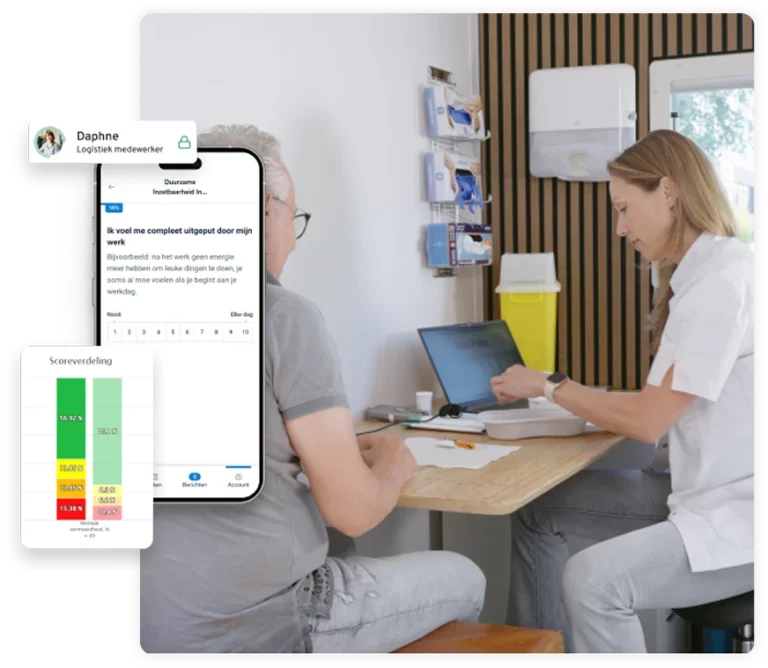
A Preventive Medical Examination (PMO) is required by law, but its true value lies in what you do with the results.…
Our consultants are ready to discover together how to create a healthy, safe and vital work environment in your company.
Request a quote Lisa Meddens
CEO of Simple Check