



- We get a 9.2 from more than 3,000 reviews
- Digital dashboard with real-time insights
- ISO certified
Menu

Understanding the impact of prevention on absenteeism, job satisfaction and productivity
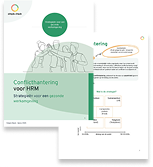
A manual based on proven methods such as TKI, coaching and mediation.

Learn how to effectively use the Sustainable Employability Index to strengthen your organization.


Exercise and sports are effective on an awful lot of levels. It has a positive impact on both physical and mental health and it gives self-confidence. However, more than half of the Dutch population moves far too little. Many people have a sedentary job and therefore sometimes spend more than 70% of their day sitting. This brings with it health risks, such as an increased risk of obesity and cardiovascular disease, for example. Even people who exercise one hour a day run the same risks if, in addition, they spend most of the day sitting. But exactly how much should you exercise to stay healthy? And what is the best thing to do in terms of exercise or sports? Read more about it in this blog!


5-step plan for effective policy, including checklist.
"*" indicates required fields
More than 1,700 companies went before you. It's that simple. Check.
You should always try to avoid sitting still for long periods of time. According to exercise guidelines, it is important for adults to engage in at least 150 minutes of moderate-intensity exercise per week, spread over several days. In addition, it is good to do muscle and bone strengthening activities at least twice a week. Please note: this is the minimum. When it comes to exercise, more is always better. Provided, of course, that you do not exceed your own physical limits!
The exercise guidelines indicate the minimum amount you should exercise. More exercise is always better. Whether you build this up by moving more often or by moving longer or more intensively; it doesn't matter! This image from the knowledge center clearly shows how the different types of exercise are categorized by intensity. Sitting still is a separate category. This includes all activities in which you use little or no more energy than at rest. Think of reading, computing or watching TV.

If you want to exercise more you can choose from two different forms of exercise; cardio training and strength training. Cardiotraining is short for cardiovascular training. This has everything to do with your blood vessels and your heart. In cardiotraining, the heart especially plays a big role. Forms of cardio training include running, swimming, cycling, walking, rowing, cross-training and stepping. Strength training involves performing relatively short movements with moderate to high weights/weights. Loose weights, machines or your own body weight are used for this purpose.
Both cardio and strength training have many benefits, so both are important. Where you want to focus on depends entirely on your goals. If you mainly want to increase your endurance, cardio training is a good choice, if you want to become more muscular, focus on strength training and if you want to lose weight, combine both workouts. You can do this at the gym, or you can choose a sport that combines both workouts right away, like crossfit.
Exercise is not necessarily intensive training, but can be done during the day with small adjustments. There is often a lot to gain here! Read this nice blog about how to persevere to exercise more!

As CEO of Simple Check, I am committed to helping organizations and employees work in a vital, healthy, and enjoyable way every day.
Working with Simple Check means clear insight into what is really going on within your organization.
We help companies get a handle on work stress, vitality, health and engagement so that employees stay healthier, more energetic and productive.
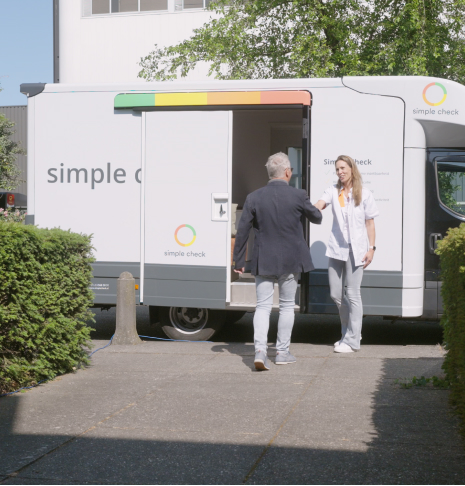
A Preventive Medical Examination (PMO) is required by law, but its true value lies in what you do with the results.…
Our consultants are ready to discover together how to create a healthy, safe and vital work environment in your company.
Request a quote Lisa Meddens
CEO of Simple Check